
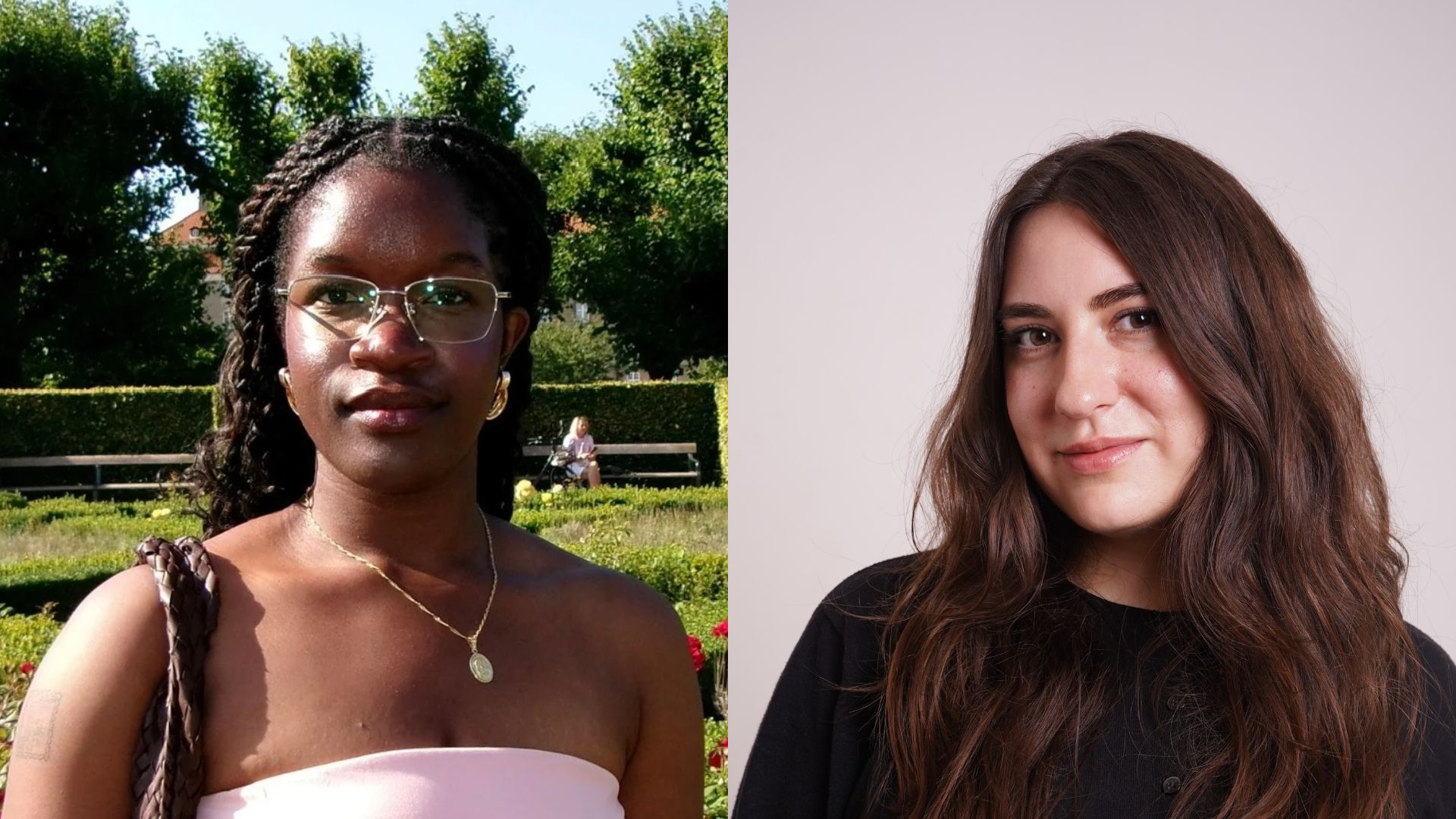
(left to right: Eain Arinze (’26) and Hannah Long (’16). Images courtesy of the artists)
We asked IDA alumni artists to imagine the future of arts education. What emerged was, Class of 2100, IDA’s contribution to the 2027 Further Triennial where ritual and movement are tools for learning.
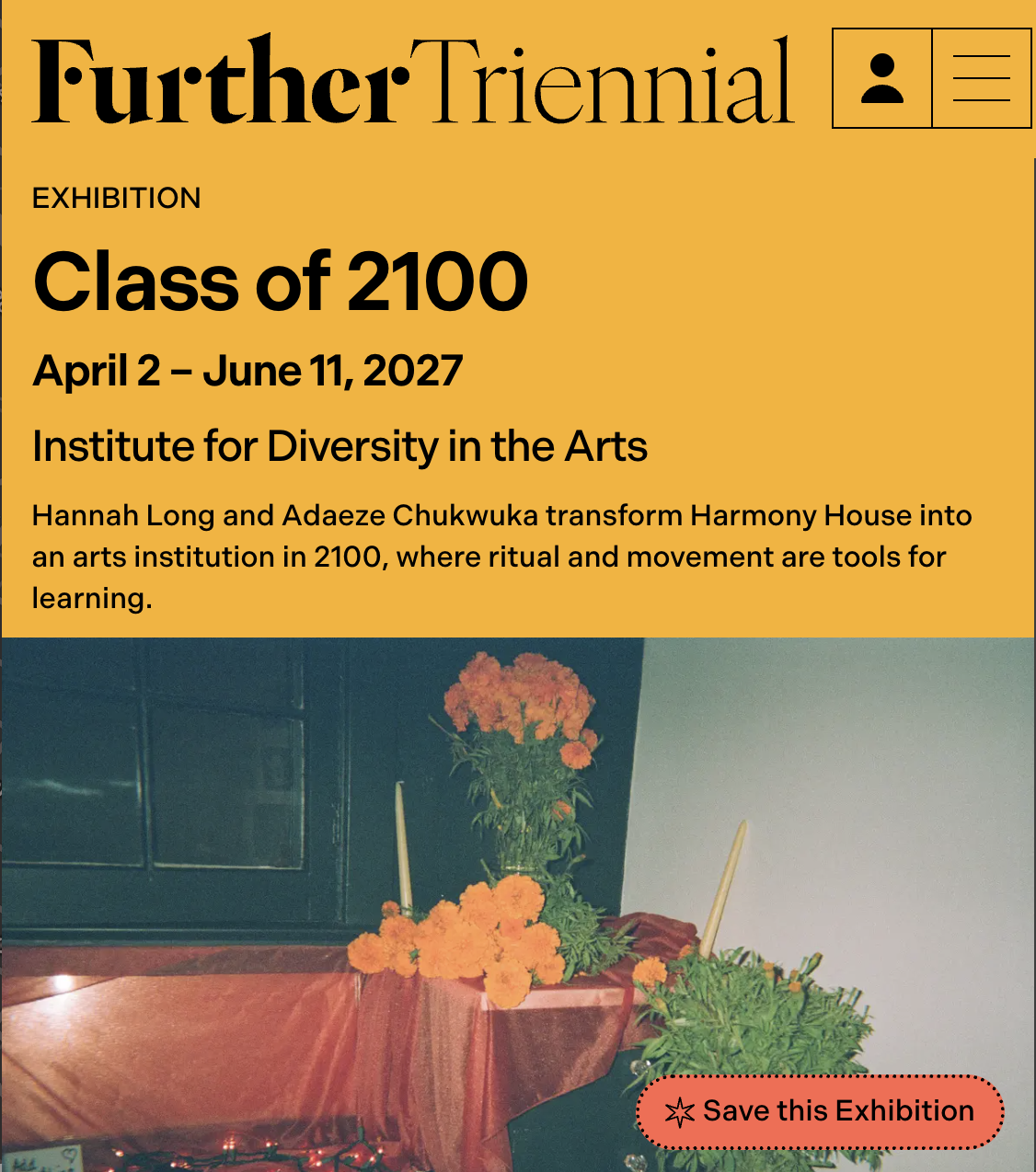
Class of 2100 transforms Harmony House into a speculative arts institution in the year 2100. Curated by curated by L. Song Wu, the exhibition responds to the precarity of Bay Area arts education with collective imagination. Stanford alumni Hannah Long (’16) and Eain Arinze (’26) will create two imagined departments that ask how art, education, and community might evolve amid ecological, political, and social change. The show runs at the Harmony House (561 Lomita Drive, Stanford CA 94305) from April 2 – June 11, 2027.
Eain Arinze is a Nigerian-American wood and sound artist, born and raised in Washington, D.C. She makes wooden furniture that doubles as instruments, producing sound that makes one aware of their own movements. Physicality is her first language. Drawing from her hyper-religious upbringing and experience with chronic illness, her work explores two major themes: the body as both an archive and an instrument, and ritual as both farce and meditation. Embedded in these explorations are recurring questions: What do our physical rituals and tendencies reveal about ourselves once translated to a form we can’t ignore? What is freedom in the context of religion, society, and trauma? Arinze now lives in San Francisco, where she also works as an engineer, sings as a classically trained soprano, and parents her cat, Toni Meowison.
Hannah Long is an artist and creative practitioner based in San Francisco. Through her practice, Sofreh Studio, she explores ritual, nature, and material form. Creating on a scale from handcrafted objects and talismans to large-scale collective experiences, her work examines how ritual can create meaning and connection. Her work draws from ancestral and contemporary traditions, herbalism, and found materials. She is particularly interested in the rituals of everyday life, and what they reveal about our relationships to one another and the environments we inhabit. Her work has included interactive community ceremonies, seasonal gatherings, large-scale botanical installations, floral design, ritual objects, and more.
Further’s new website is live. Find us on the map!