
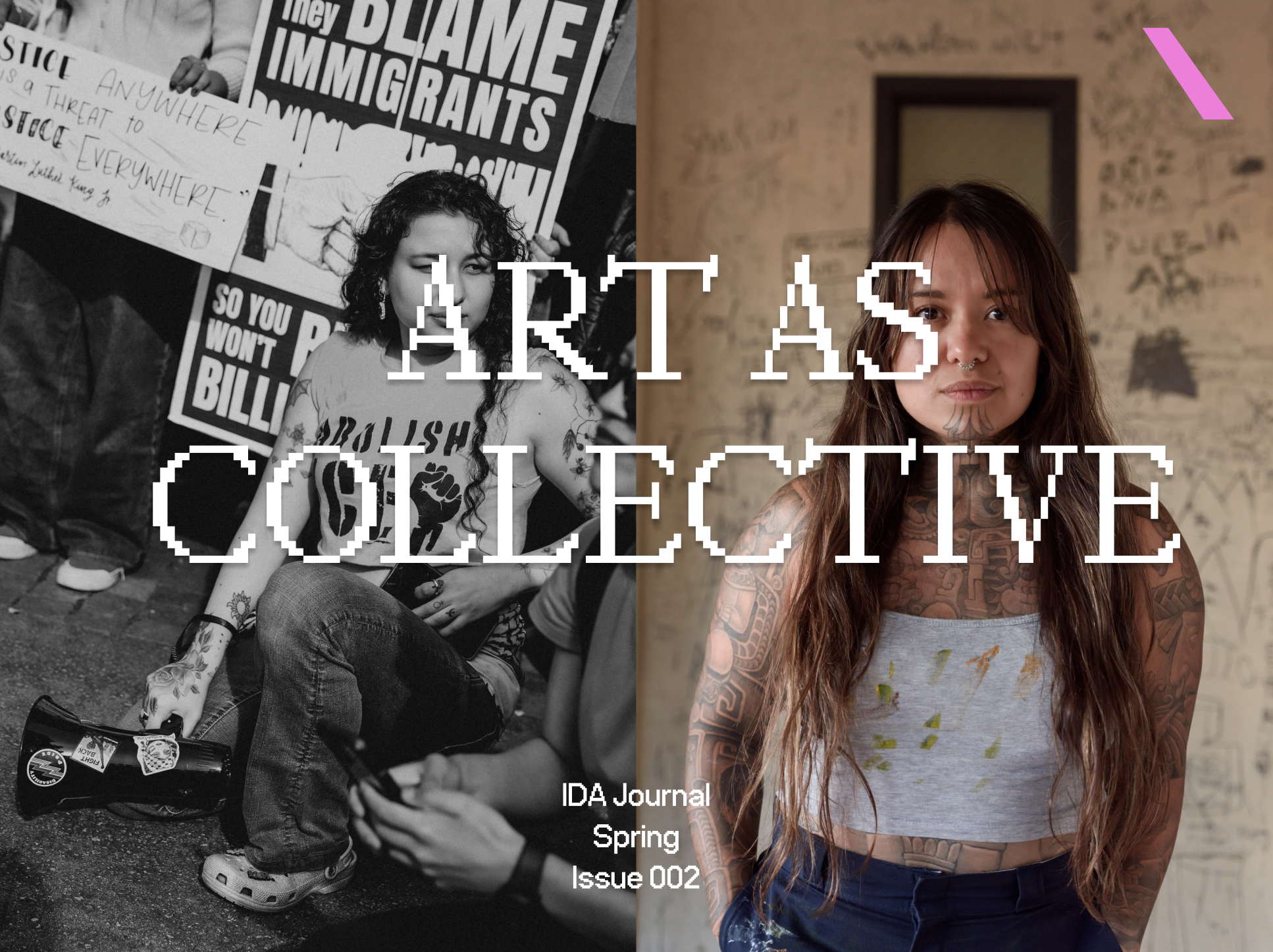
Art as Collective
Our Spring 2026 edition of the IDA Journal centers on Art as Collective. Art is never made alone. In our practices, we carry the people, places, histories, and communities that have shaped us, including those we may never have met but whose lives and labor continue to move through our own.
We are honored to showcase the brilliant work of Eva Matentsian, Taz Laursen, Liyah Nicole, Hawthorn Bolger Witherspoon, and Haein Shim. Through poetry, fiction, photography, and visual art, these students wear their hearts on their sleeves, offering intimate and expansive reflections on how we are connected, remembered, and intertwined.
This quarter’s edition also features an interview with Napa-based visual artist Arleene Correa Valencia, who reflects on the significance of Napa, migration, family, and the emotional and physical journey of making art in collaboration with loved ones. Click here to jump down and read her interview.
To see last quarter’s IDA Journal, please click here.
Curated by: Song Wu, IDA Program Coordinator
⠀⠀⠀⠀⠀⠀⠀⠀⠀⠀⠀⠀⠀⠀⠀⠀⠀⠀⠀⣀⠀⣠⢤⣄⠀⡀⠀⠀⠀⠀⠀⠀⠀⠀⠀⠀⠀⠀⠀⠀⠀⠀⠀⠀⠀⠀⠀
⠀⠀⠀⠀⠀⠀⠀⠀⠀⠀⠀⢸⣟⠷⡏⡀⣿⡿⣿⡇⠀⠀⠀⠀⠀⠀⠀⠀⠀⠀⠀⠀⠀⠀⠀⠀⠀⠀⠀⠀
⠀⠀⠀⠀⠀⠀⠀⠀⠀⠀⠀⠀⠈⠳⡆⠀⣴⡟⠃⠀⠀⠀⠀⠀⠀⠀⠀⠀⠀⠀⠀⠀⠀⠀⠀⠀⠀⠀⠀⠀
⠀⠀⠀⠀⡟⡆⠀⠀⠀⠀⠀⣴⢤⣀⡇⠀⢻⣀⡶⢦⠀⠀⠀⠀⠀⡴⢦⠀⠀⠀⠀⠀⠀⠀⠀⠀⠀⠀⠀⠀
⠀⣴⠟⠻⡇⣷⡀⠀⡏⢻⠀⠙⢦⡉⠻⡄⠞⣁⡴⠏⠀⣠⣦⠀⠀⣇⢸⣦⠶⣦⠀⠀⠀⠀⠀⠀⠀⠀⠀⠀
⠀⢙⣷⢯⡄⠉⠻⢦⣧⢸⡆⠀⠀⠈⡏⠀⢾⠃⠀⠀⠀⡇⢸⣀⠶⠻⠈⠀⢴⣞⣀⠀⠀⠀⠀⠀⠀⠀⠀⠀
⠈⢯⠵⠚⠛⠳⣤⣀⠙⠈⢷⣄⠀⣀⡇⠀⢸⣄⠀⢀⣠⠗⠘⠁⣀⡴⠚⠛⠲⠼⠟⠀⠀⠀⠀⠀⠀⠀⠀⠀
⠀⠀⠀⠀⠀⡟⣉⣼⠶⢦⣀⠈⠛⠁⠀⠀⠀⠈⠛⠉⢀⣷⣦⣌⡙⠳⢦⡄⠀⠀⠀⠀⠀⠀⠀⠀⠀⠀⠀⠀
⠀⠀⠀⠀⠀⠉⠁⠀⠀⠀⠙⣷⠀⠀⠀⠀⠀⠀⠀⢺⠋⠁⠀⠀⠉⠙⠛⠀⠀⠀⠀⠀⠀⠀⠀⠀⠀⠀⠀⠀
⠀⠀⠀⠀⣾⠓⠶⢤⣀⣀⡴⠟⠀⠀⠀⠀⠀⠀⠀⠺⣆⡀⢀⣠⡴⢶⠀⠀⠀⠀⠀⠀⠀⠀⠀⠀⠀⠀⠀⠀
⢀⣀⡀⠀⠀⢉⣳⠶⠌⠁⣀⣴⢶⣄⡀⠀⢀⣠⡷⣄⡀⠙⠫⣵⣖⠉⠀⠀⣠⣤⠀⠀⠀⠀⠀⠀⠀⠀⠀⠀
⠙⢧⣭⡽⠒⠋⢁⣠⡆⢹⠉⠀⠀⠈⡏⠉⣿⠁⠀⠈⢹⡕⣤⡀⠉⠳⢖⣋⡽⠟⠁⠀⠀⠀⠀⠀⠀⠀⠀⠀
⠀⡞⠉⢀⡄⣶⠋⠡⣇⣸⠀⠀⣀⡴⡃⠀⡛⢦⣀⠀⠈⣇⢸⠙⠲⣤⠈⠉⠳⣦⠀⠀⠀⠀⠀⠀⠀⠀⠀⠀
⠀⠉⠉⠉⣇⣿⠀⠀⠈⠁⠀⣿⣁⡴⡟⠀⣿⢦⣌⣳⠀⠹⠾⠃⠀⢸⣈⣷⠶⠟⠀⠀⠀⠀⠀⠀⠀⠀⠀⠀
⠀⠀⠀⠀⠉⠁⠀⠀⠀⠀⠀⠈⠁⢀⡇⠀⣿⡀⠈⠉⠀⠀⠀⠀⠀⠈⠙⠋⠀⠀⠀⠀⠀⠀⠀⠀⠀⠀⠀⠀
⠀⠀⠀⠀⠀⠀⠀⠀⠀⠀⠀⢠⡤⢚⡅⠀⣭⡛⢦⡄⠀⠀⠀⠀⠀⠀⠀⠀⠀⠀⠀⠀⠀⠀⠀⠀⠀⠀⠀⠀
⠀⠀⠀⠀⠀⠀⠀⠀⠀⠀⠀⠘⠿⠉⣧⢀⣾⠉⠟⠋⠀⠀⠀⠀⠀⠀⠀⠀⠀⠀⠀⠀⠀⠀⠀⠀⠀⠀⠀⠀
⠀⠀⠀⠀⠀⠀⠀⠀⠀⠀⠀⠀⠀⠀⠈⠉⠁⠀⠀⠀⠀⠀⠀⠀⠀⠀⠀⠀⠀⠀⠀⠀⠀⠀⠀⠀⠀⠀⠀⠀⠀⠀
Winter in Minnesota
By Eva Matentsian
Eva is from Los Angeles and she is now a third-year undergraduate majoring in Human Biology and minoring in Education on the pre-med track. She is the product of immigrants who labored as farmworkers in California’s Central Valley. She is very grateful for the sacrifices of her ancestors that made it possible for her to be here today.
Esperanza loved her purple lunch pail. The faded case was shaped like a butterfly, and the worn brass clasp flipped open with a click. Every day at lunch, she pulled out a torta folded in a napkin her mamá had packed that morning. The napkin was always warm, even in winter.
She ate long strips of jícama, still tasting the limón her mamá sprinkled over it with her fingers. Esperanza and her papá loved to stick the jícama under their lips and puff out their cheeks, pretending to be walruses. They flopped around the kitchen, making loud noises until their lungs burned from laughing.
Sometimes her mamá added orange slices and a tiny packet of salt as a treat. Esperanza loved sprinkling the salt over the bright fruit just like her mamá. Every morning her mamá tied Esperanza’s long black hair into a braid and secured it with purple ligas. In the sun, her hair shone like her mamá’s, dark and clean and strong. Her mamá worked long hours bent under the sun in the cornfields. Her hands fed families across the United States. Esperanza knew this because her mamá said it plainly, without pride or complaint, while rubbing lotion into her cracked palms at night.
Esperanza, her mamá, and her papá came from Las Bocas, a small pueblo in Jalisco, in search of a better life. They had been in the States for five years, long enough that Esperanza remembered very little of the ranch where she was born. She did remember the handmade cobblestone fence she walked past to her abuelo’s purple house though. The purple there was brighter, she thought, like it didn’t get tired.
One January afternoon, snow piled high along the sidewalks of Minnesota and swallowed the curbs. When Esperanza came home from school, something was wrong. Huge paw prints stamped the snow in front of her door. Each print was wider than her purple lunch pail and crushed the snow so deeply it exposed the gray sidewalk beneath. Blood dotted the snow. Esperanza’s chest tightened. She ran up the steps and banged on the door, calling for her mamá and papá. The door opened before she could knock again, as if someone had been waiting.
A polar bear stood in the doorway. He was enormous, his fur yellowed like February ice. From between his teeth, blood slid down and over the matted fur on his neck. Papers littered the apartment behind him. A chair lay on its side. The couch cushions lay shredded, searched. The room reeked of sulfur and cold.
“Hello?” the polar bear said, peering down at her.
“Where is my mamá and papá?” Esperanza asked, her hands clenched at her sides. The beast sighed and glanced around the apartment.
“They are gone.”
His dark eyes settled on her, heavy and bored. They were black and empty. Esperanza shivered, but she kept her chin up.
“Where did they go?”
“They took the boat back to the South Pole.”
Esperanza frowned. “When will they come back?”
The bear scratched his chin. “Hopefully never,” he mumbled, stepping aside so she could enter. “Mamá and Papá wouldn’t leave without saying goodbye,” Esperanza cried. “You took them!” The bear tilted his head.
“Little girl,” he said slowly, “your parents knew the rules.”
“What rules?” Esperanza demanded.
“The winter rules.”
“That’s not real,” she said. “My mamá and papá are good people. Bring them back.” The bear shrugged, a heavy rolling motion that made his fur shift like dirty snow. “I can’t.”
“Why not?”
The polar bear stepped over and past her without remorse, his stench filling her nose.
“Because the boats only go one way.”
He walked out through the howling door, and the cold poured into the lonely room.
Esperanza stepped forward, waiting for her parents to emerge from hiding behind the couch. Her foot slid forward and she caught herself on the wall. The tile was slick.
Black ice had crept across the apartment, coating the floor and climbing the walls. Icicles hung from kitchen counters. Frost webbed over family photographs, blurring her mamá’s smile, cracking her papá’s face down the middle. The apartment smelled like cold metal.
“Mamá?” Esperanza whispered, her breath billowing white.
Only the sound of the ice hissing as it spread slowly across the apartment answered her call.
That night, Esperanza slept on the couch with her butterfly lunch pail pressed against her chest. No one tucked her in. Her stomach growled and the apartment stayed cold. Outside, snow kept falling, erasing the enormous tracks.
Winter continued. The polar bears came and went and took Mamás and Papás away. Sometimes Esperanza saw them outside other buildings, their paws buried in the snow.
Before they entered, they never knocked.
⠀⠀⠀⠀⠀⠀⠀⠀⠀⣀⠀⠀⠀⠀⣾⣿⣶⣶⣤⣤⣤⣶⣤⡄⠀⠀⠀⠀⠀⠀
⠀⠀⠀⠀⠀⣠⣴⣾⣿⣿⣿⣷⣦⡘⠛⠛⢿⣿⣿⣿⣿⣿⣿⣿⡄⠀⠀⠀⠀⠀
⠀⠀⠀⠀⢀⣿⣿⣿⣿⣿⡿⠟⢋⣁⣤⣤⣀⠈⠻⣿⣿⣿⣿⣿⣿⡄⠀⠀⠀⠀
⠀⠀⠀⣴⣿⣿⣿⣿⠟⠉⠀⣾⣿⣿⠿⢿⣿⣷⣄⠙⢿⣿⣿⣿⣿⣿⠀⠀⠀⠀
⠀⠀⢰⣿⣿⣿⣿⠏⢀⣤⣦⣀⣤⣶⣤⣠⡀⠈⠻⠇⢸⣯⡙⠛⠛⣫⣤⣄⠀⠀
⠀⠀⢼⣿⣿⣿⣿⢠⣿⠟⣿⣿⣿⣿⡿⣿⣿⣆⣤⣤⠘⣿⣿⣦⣾⣿⣿⣿⣧⠀
⠀⠀⠈⢿⣿⣿⡇⣿⡏⠀⢿⣿⣿⣿⡆⠀⣿⡿⢹⣿⣧⠹⠋⠀⣿⣿⣿⣿⣿⣧
⠀⢠⣿⣦⠻⣿⡇⣿⣿⡄⠈⠻⣿⣛⣡⣴⠟⢁⣾⣿⡟⣠⣶⣄⢸⣿⣿⣿⣿⡏
⢀⣾⣿⣿⠀⠈⠁⠘⣿⣿⣷⣤⡌⣛⣭⣥⣶⣿⡿⢋⣼⣿⣿⣿⣼⣿⣿⣿⠟⠀
⢾⣿⣿⣿⠀⣿⣿⣆⠈⣻⡿⠟⠋⠀⠉⠛⠉⢁⣴⣿⣿⣿⣿⣿⣿⣿⣿⠋⠀⠀
⠈⢻⣿⣿⡄⣿⣿⣿⣧⡘⢿⣷⣶⣤⣤⣴⣶⣿⣿⣿⠿⠟⠋⠽⠿⣟⣵⡆⠀⠀
⠀⠀⠙⢿⡷⢻⣿⣿⣿⣿⣶⣦⣭⣭⣙⣛⣛⠉⠉⠀⠀⣀⣤⣴⣾⣿⡿⠁⠀⠀
⠀⠀⠀⠀⠀⠈⠻⢿⣿⣿⣿⣿⣿⣿⣿⣿⣿⣿⠇⣴⣿⣿⣿⣿⠟⠋⠀⠀⠀⠀
⠀⠀⠀⠀⠀⠀⠀⠀⠙⠻⢿⣿⣿⡿⠿⠟⠋⠁⠀⠉⠛⠟⠋⠀⠀⠀⠀⠀⠀⠀
damned if you do, damned if you don’t
About Taz Laursen
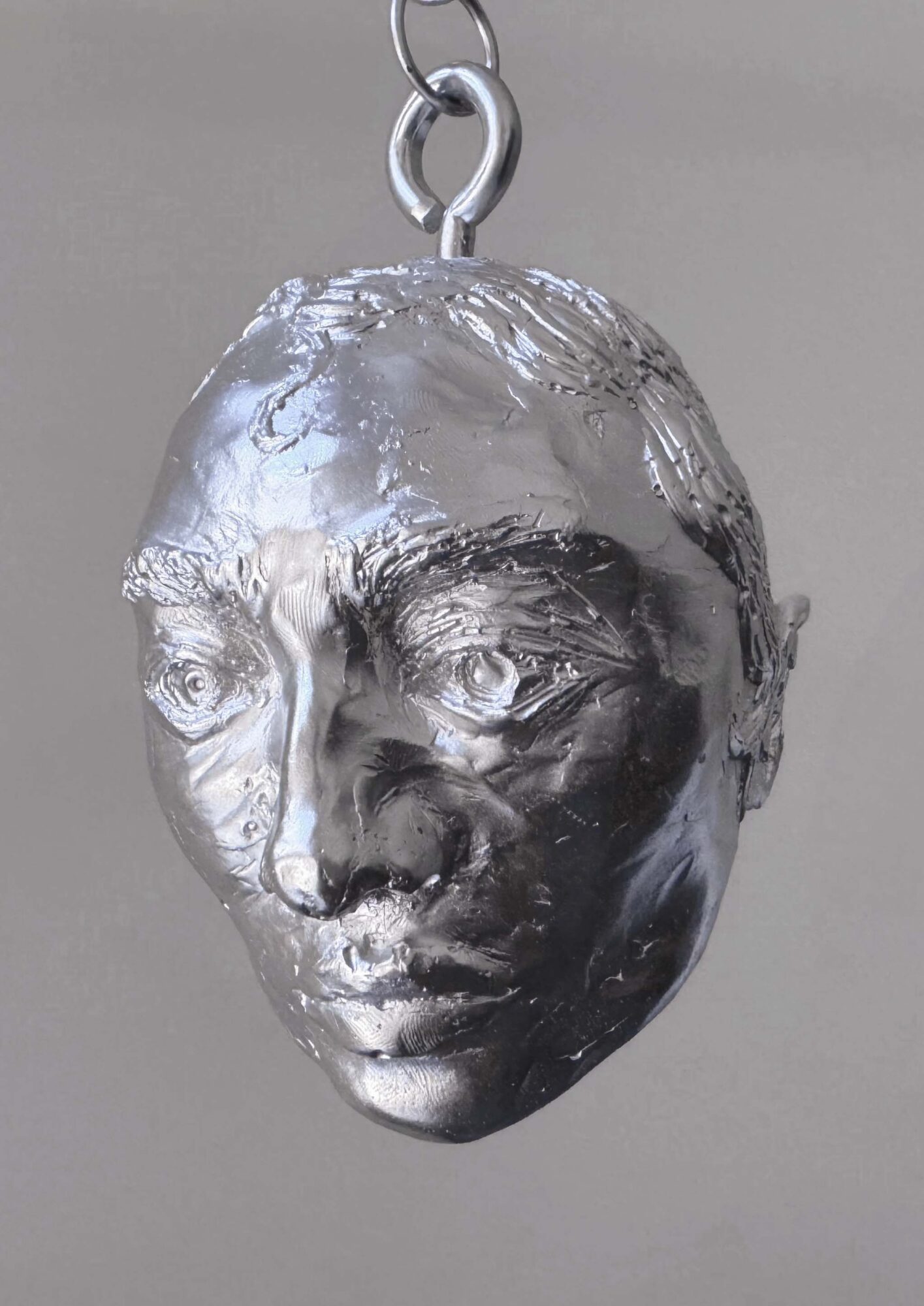
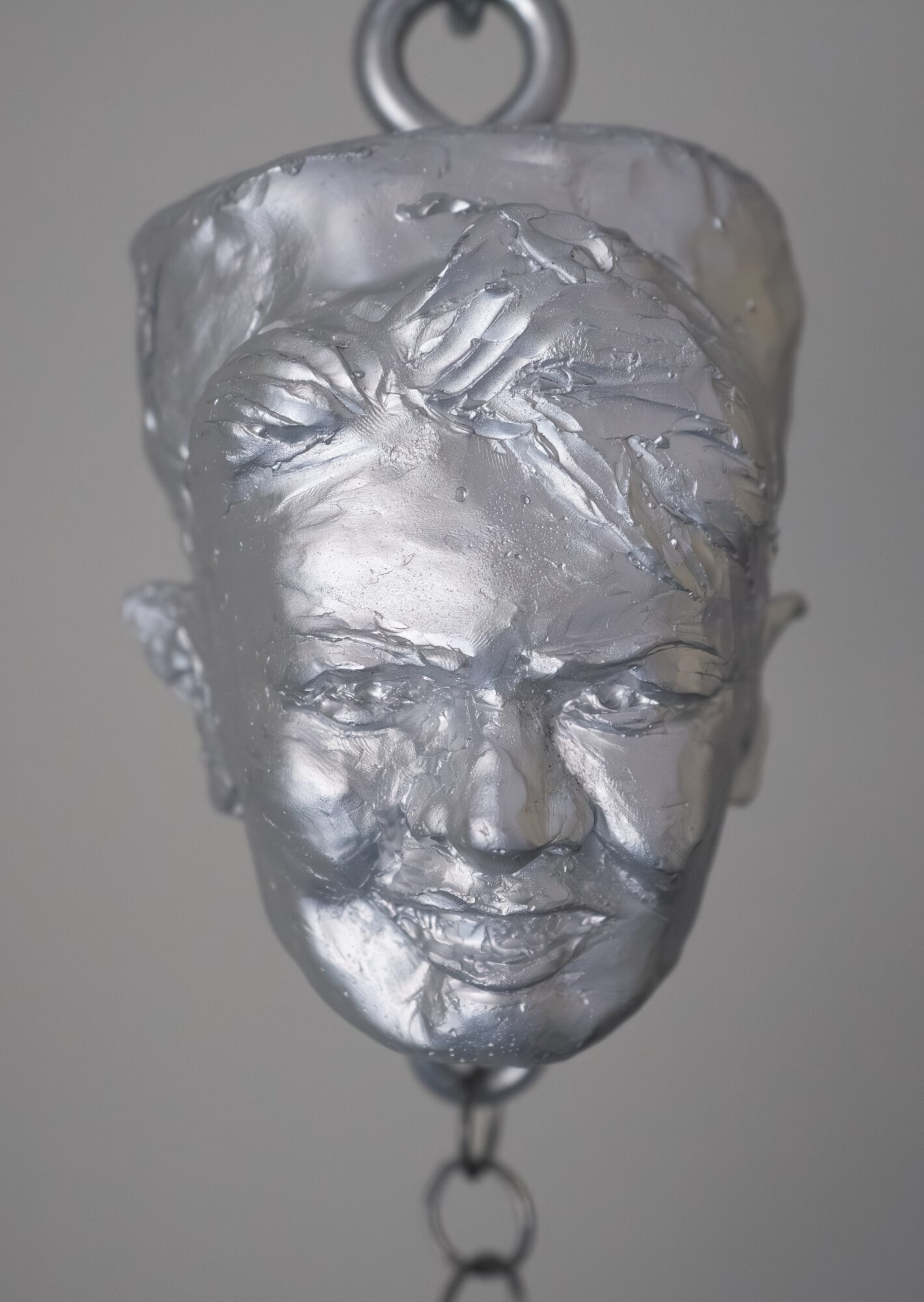
Taz Laursen is an artist and undergrad studying art practice at Stanford University. They create mixed-media sculptures and installations about the people who move in the marginalia of history. Their projects reference black, queer and neurodivergent experiences, often interwoven with collective practices, ancestral veneration, and broader mythologies. Taz sculpts with both traditional and experimental materials. They live in the Bay Area with their two cats, Booger and Freem.
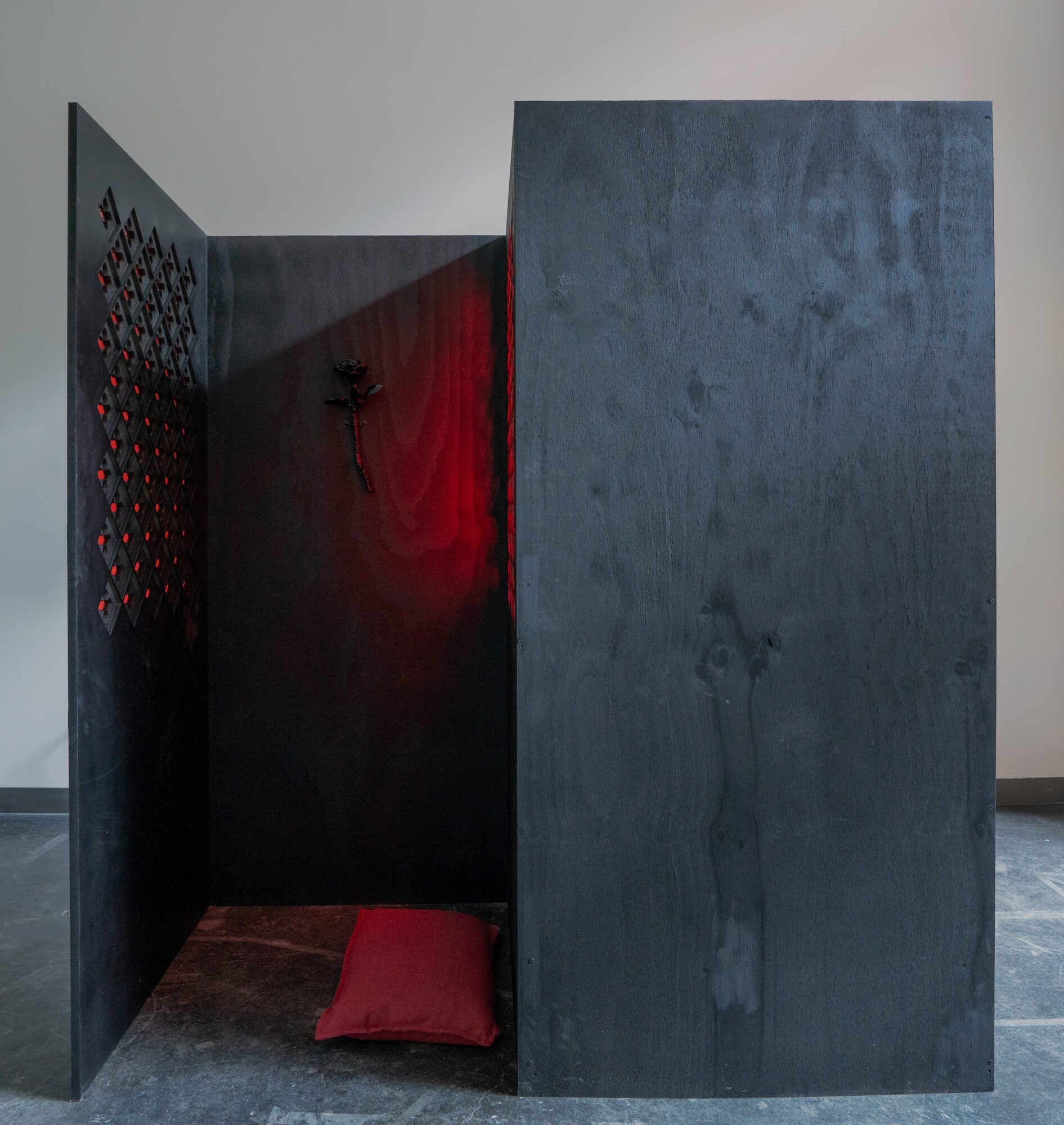
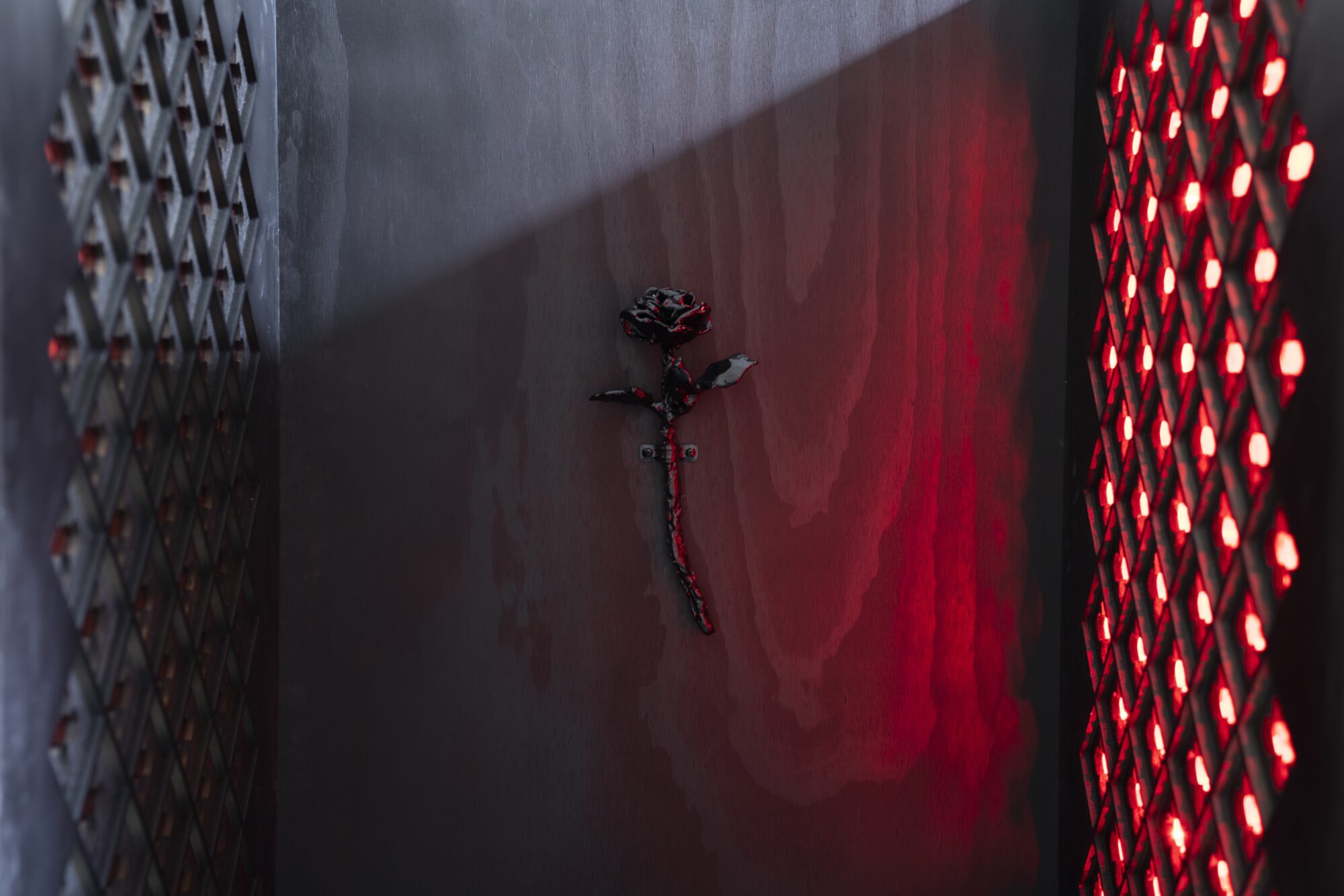
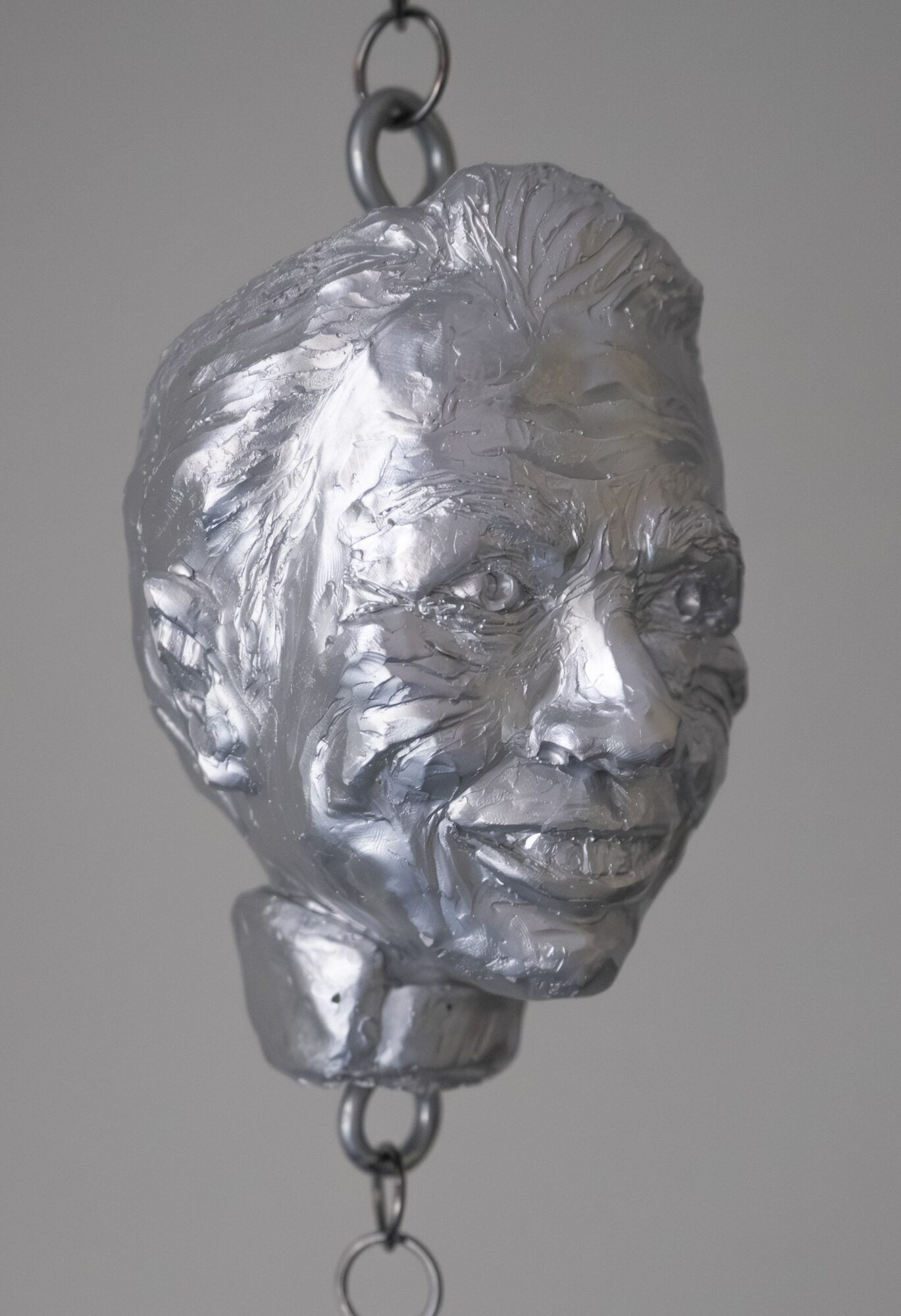
Honoring the memory of Rev. Dr. Pauli Murray, a civil rights activist, legal scholar, and poet, Taz built a confessional booth installation titled, “damned if you do, damned if you don’t” (2026). They owe their life and freedoms to people like Pauli, whose radical genderqueer expression within the ordained confines of tradition allowed for today’s wider support of people with marginalized gender experiences. They defied the restrictions of their time and showed, through shared struggle, how to support community even in turbulent and exclusionary societal conditions. Taz’s sculptural practice, through spiritual connection, reaches across histories to meld collective visions for a liberatory future while stewarding critical legacies. There are two main components to the scene: a fully open, queerly structured confessional and a suspended memento mori chain of miniature busts, inspired by a monastic ritual of brotherly love. The booth is self-supported and has six panels—three of them, in parallel, feature semitranslucent, lattice-bound, and quatrefoil-shaped cut-outs. There are glossy black, lacquered roses bound to each internal wall. The center panel is double-sided and internally lit, emitting a red glow through the form’s entire body. They hope to remind others of figures like Pauli, who insisted on their existence, that we’ve been here before, and we can rely on each other for survival and progress.
Taz laursen
⠀⢀⣀⢀⣀⠠⠠⠀⠠⠀⠀⠀⠠⠤⠤⢀⣀⣀⡀⠀⠀⠀
⢰⡟⢉⣈⣁⣀⣤⣤⣤⣤⣤⣤⣤⣤⣤⣤⣤⣀⣀⡉⢳⠂
⠸⡻⡏⣽⣋⣉⣥⣍⣤⣤⣤⣤⣤⣤⣤⣉⣉⣙⡟⢻⣿⡄
⠀⠘⢧⣞⡗⠉⠀⠀⠀⠀⠀⠀⠀⠀⠀⠀⠈⢻⢳⢸⡈⠀
⠀⠀⢹⡟⠀⠀⠀⠀⠀⠀⠀⠀⠀⠀⠀⡀⠀⢸⣷⡎⠀⠀
⠀⠀⢮⡵⢇⠀⠀⠀⠀⠀⠀⠀⢐⠁⠁⠀⠀⡸⣿⡽⡁⠀
⠀⠀⣲⡟⡏⢂⠀⠀⠀⠀⢀⡮⠒⠋⢉⡷⡼⠟⢧⣟⡁⠀
⠀⠘⡇⢸⡁⠑⠱⢐⡶⠿⠶⠟⠓⡩⣫⠚⠈⢠⡞⢸⣀⠀
⠀⣻⣀⡀⡧⡄⠀⠀⠁⡢⡀⠠⢪⠞⠑⠀⠀⢱⠁⠀⡇⠂
⠀⠀⣟⣻⡅⠀⠀⠀⠀⢸⡖⢶⣑⠀⠀⠀⠀⢨⡻⢻⡇⠀
⠀⢬⠛⠻⣔⡀⠀⠀⢀⠜⢰⠀⠣⣄⡀⠀⠀⢈⠟⠛⡔⡄
⠐⣻⡄⢠⡏⠃⡀⠐⠁⠀⠀⡆⠀⠈⠢⣠⠀⠿⡀⢀⡟⡆
⠀⠰⣧⣿⠆⠮⠊⠀⠀⢀⠌⠱⣄⠀⠀⠙⢯⢘⢱⣸⠉⠀
⠀⢀⡽⡇⡻⠁⠀⡠⠂⠁⠀⠁⠈⠙⢢⣄⠈⢳⢷⡟⡁⠀
⠀⠘⣷⣾⢃⠔⠀⠀⠀⠀⠀⠀⠀⠈⡈⣡⡝⡜⡽⡼⠄⠀
⠀⠀⣽⡇⡤⠈⠀⠉⠑⠦⠴⠶⢖⢞⠋⠁⢀⢧⣧⡷⡀⠀
⠀⢌⡆⢼⡼⣬⣶⢄⣐⡀⢀⣀⢠⡀⢬⣶⣑⡿⣾⢼⡠⠀
⢰⡿⠷⣞⣓⡤⠤⠄⣀⣀⣀⣀⣀⣀⠠⠤⠤⣖⣳⣴⢿⡆
⠘⠙⠦⣀⡀⠀⠉⠉⠉⠉⠉⠉⠉⠉⠍⠉⣉⣁⣠⡤⠞⠇
⠀⠀⠈⠁⠈⠉⠉⠉⠀⠀⠀⠀⠀⠀⠈⠉⠉⠉⠀⠀⠀⠀
1985 Was a Good Year
By Liyah Nicole
Liyah Nicole (she/her) is an English major at Stanford University, from New Orleans, LA, where she first learned how powerful capturing a single moment can be. Liyah works between pages and frames, writing and directing to capture moments that audiences can live through. Her short films and immersive writings focus on small moments that feel real, present, and intimate. Humor and sensitivity live side by side in Liyah’s work as she creates stories that feel relatable, vulnerable, quirky, and of course funny, like you’ve stumbled into real life with the record button already on.
꧁𓃙𓃠𓃥𓃚𓃙𓃠𓃥𓃚𓃙𓃠𓃥𓃚𓃙𓃠𓃥𓃚𓃙𓃠𓃥𓃚𓃙𓃠𓃥𓃚𓃙꧂
Does Coyote know when he crosses you?
By Hawthorn Bolger Witherspoon
Hawthorn Bolger Witherspoon is a multi-generational NuevoMexicana from Albuquerque. Currently studying Maternal Health and traditional medicine in the Human Biology program, she is pursuing a graduate degree in the CHPR coterm. She loves her mom, god, dirt, writing, women, and telling the stories of home.
call her Auntie. Her name is secret, like my name,
it’s one that you are given by your grandmother, or mother, or sister.
It’s a one you only whisper to your lover, or your dog, or medicine woman when she calls it out of you.
For this story Auntie will go by Auntie.
When I ask Auntie if she thinks Coyote knows he’s bad, she reminds me that most languages don’t have the words for
good or
for bad.
Coyote is a trickster, a messenger, he is an ancestor. He does not know the word for bad.
When I let the word for good fill up my mouth, I have to pour it, out,
filling up a seed pot, one hole, with nowhere but breath to go
When I fashion the word for bad, my mouth is bitter with clay.
Auntie wants to become a mom at some point, not at this point, but some point, because she loves babies.
Auntie tells me has three babies. Auntie is auntie because she has three babies because Bigsisterlexi has three babies.
The first babie’s secret name is Magpie. Magpie was named Magpie because he came into the world whimpering.
When my baby was born I was asleep. I had my tent on my bed. I was so mad I missed her arrival. All I remember is seeing red. All the cotton sheets sullied with blood.
I bleed when I go home, someone has ripped my soft underbelly open.
Auntie says women used to eat needles and go to the menstrual tipi when they wanted to stay aunties. Auntie doesn’t remember if it was new waxy needles, or long dark ones. I imagine sucking and staining my teeth tannin dark. I imagine the buckskin pristine and laid across aunties lap.
Somewhere in those pines is a pecking magpie and somewhere in Auntie there is an angry dog.
And somewhere, some woman sees Coyote pass and doesn’t wait for someone to come the other
way. Some women beckon. Some women play with tricksters. And some women, some choke on tent poles and some women fall out of trees.
So, I re-phrase. Does Coyote know he brings death?
⊹ ﹏𓊝﹏𓂁﹏⊹ ˖⊹ ﹏𓊝﹏𓂁﹏⊹ ˖⊹ ﹏𓊝﹏𓂁﹏⊹ ˖⊹ ﹏𓊝﹏𓂁﹏⊹ ˖⊹ ﹏𓊝﹏𓂁﹏⊹ ˖
The Photography of Haein Shim
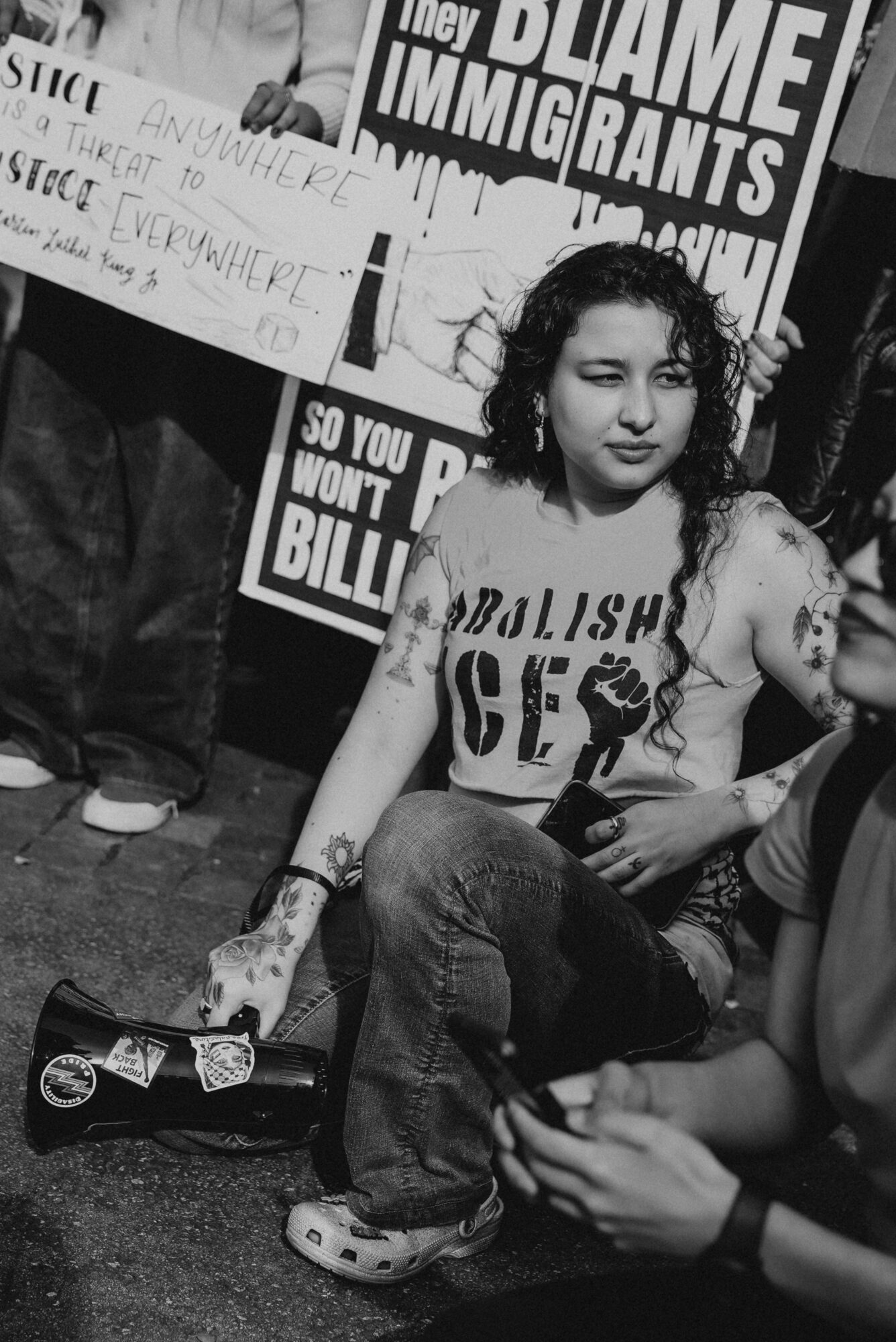
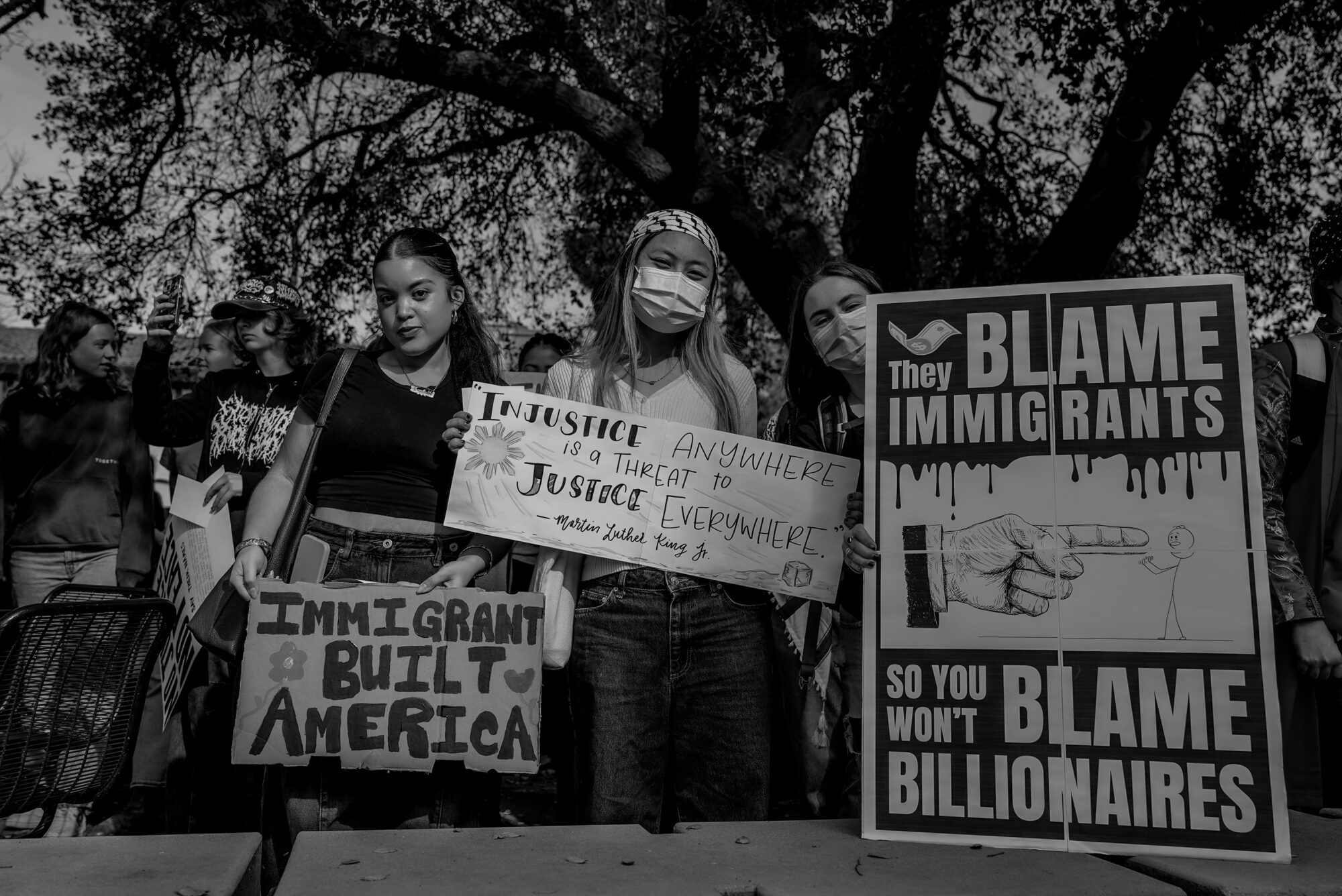
About Haein Shim
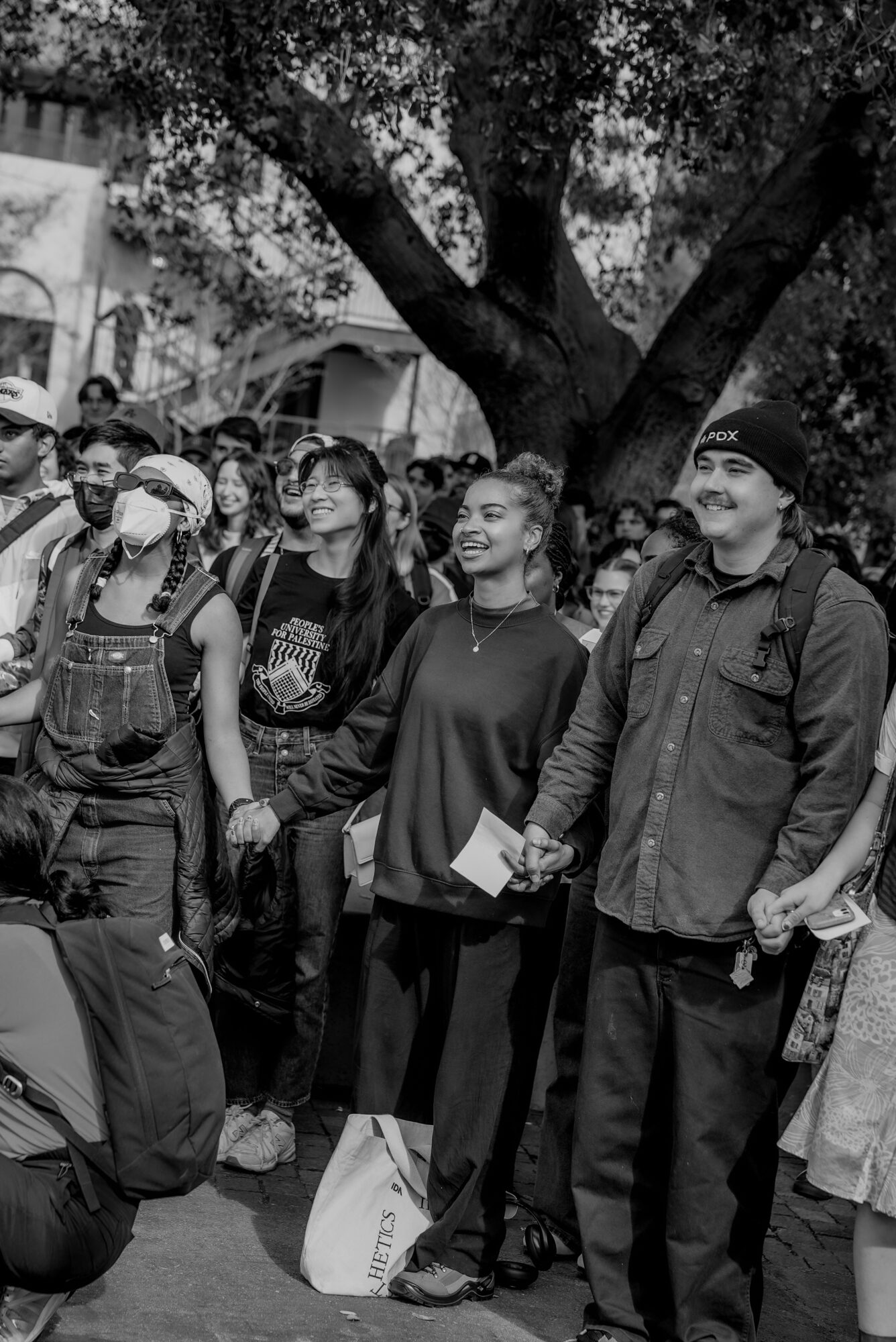
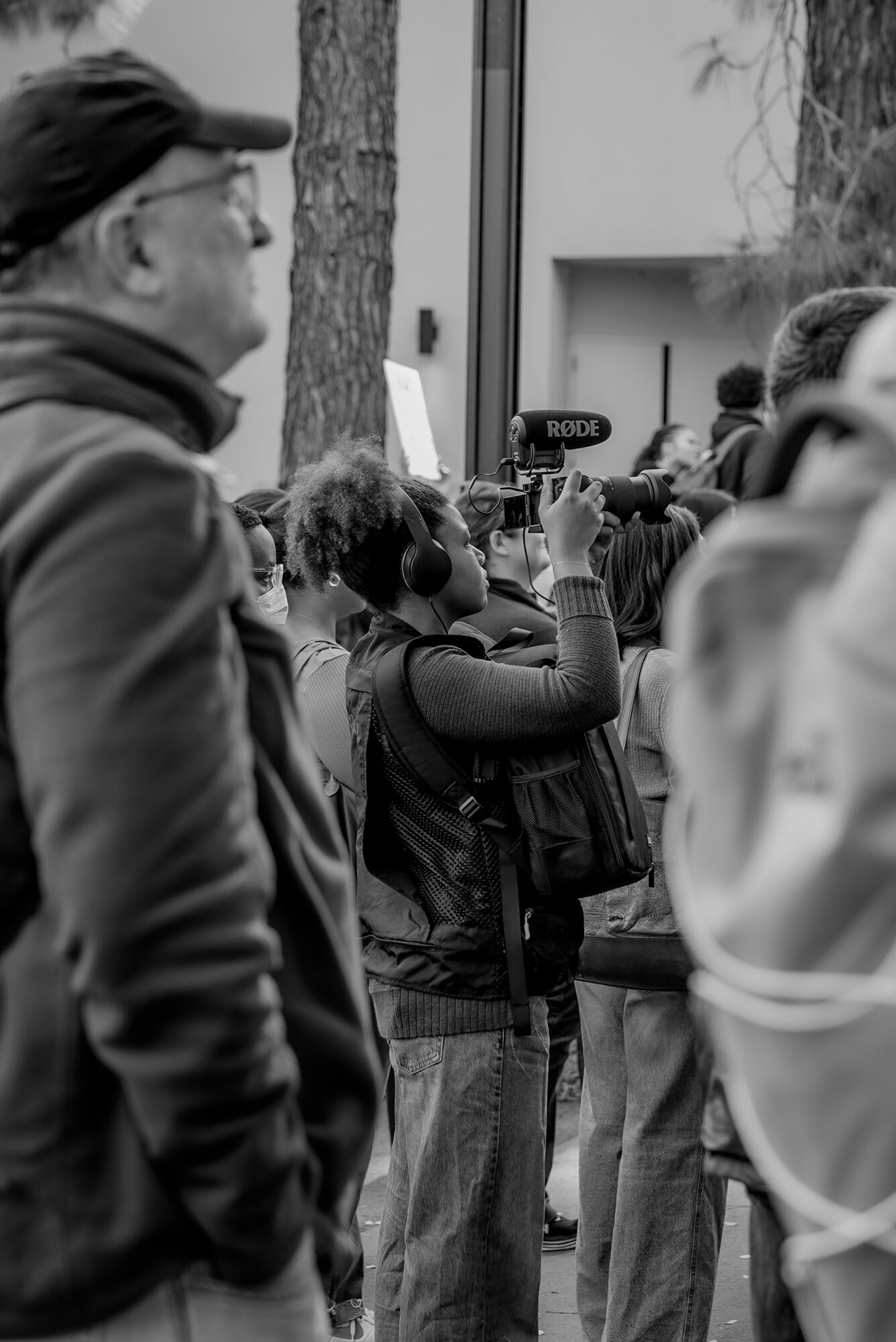
Haein Shim is a purpose-driven activist, documentary producer, freelance journalist, and photojournalist, deeply committed to women’s rights and to pursuing truth through the power of visual storytelling rooted in social justice. She has collaborated with numerous international media outlets, including TIME, The Economist, NPR, and Vice, and has published more than 50 articles worldwide. Leading global news platforms such as CNN, The Guardian, and Al Jazeera English have interviewed Shim on women’s rights issues in South Korea. She bridges her passion for social justice with visual storytelling in practice.
Art with integrity has to put collective resistance to imperialism and colonial oppression at its very core. Our work isn’t measured in galleries or accolades, it’s measured in how fiercely we fight, because who we are as artists and as humans cannot be separated from our commitment to total liberation for all people.
Haein shim
⠀⠀⠀⠀⠀⠀⠀⠀⠀⠀⠀⠀⠀⠀⠀⠀⠀⠀⠀⠀⠀⠀⠀⠀⣤⠴⢤⡀⠀⠀⠀⠀⠀⠀⠀⠀⠀⠀⠀⠀⠀⠀⠀⠀⠀⠀⠀
⠀⠀⠀⠀⠀⠀⠀⠀⠀⠀⠀⠀⠀⠀⠀⠀⠀⠀⠀⣠⢾⣛⡆⠈⡏⠰⠶⠃⠀⠀⠀⠀⠀⠀⠀⠀⠀⠀⠀⠀⠀⠀⠀⠀⠀⠀⠀
⠀⠀⠀⠀⠀⠀⠀⠀⠀⠀⠀⠀⠀⠀⠀⠀⠀⠀⢦⣿⣄⣉⣁⣤⠽⣦⣤⡶⠶⣤⣄⠀⠀⠀⠀⠀⠀⠀⠀⠀⠀⠀⠀⠀⠀⠀⠀
⠀⠀⠀⠀⠀⠀⠀⠀⠀⠀⠀⠀⠀⠀⠀⠀⠀⠀⠉⠚⠹⡉⢃⣴⠟⠉⠀⠀⠀⠀⠉⠻⣦⡀⠀⠀⠀⠀⠀⠀⠀⠀⠀⠀⠀⠀⠀
⠀⠀⠀⠀⠀⠀⠀⠀⠀⠀⠀⠀⠀⠀⠀⠀⠀⠀⠀⠀⣤⢡⡿⠁⠀⠀⠀⠀⠀⠀⠀⠀⠈⢷⡄⠀⠀⠀⠀⠀⠀⠀⠀⠀⠀⠀⠀
⠀⠀⠀⠀⠀⠀⠀⠀⠀⠀⠀⠀⠀⠀⠀⠀⠀⠀⠀⢀⡂⣿⡇⠀⠀⠀⠀⣠⣤⣀⠀⠀⠀⠘⣇⠀⠀⠀⠀⠀⠀⠀⠀⠀⠀⠀⠀
⠀⠀⠀⠀⠀⠀⠀⠀⠀⠀⠀⠀⠀⠀⠀⠀⠀⠀⠀⠀⠁⢻⣷⠀⠀⠀⠀⢯⡉⣿⡆⠀⠀⣰⡇⠀⢀⣀⢤⠀⠀⠀⠀⠀⠀⠀⠀
⠀⠀⠀⠀⠀⠀⠀⠀⠀⠀⠀⠀⠀⠀⠀⠀⠀⠀⠀⠀⠀⠘⢿⣧⣀⠀⠀⢀⣴⡟⠀⠀⣰⣿⡷⢏⡭⠔⠹⠀⠀⠀⠀⠀⠀⠀⠀
⠀⠀⠀⠀⠀⠀⠀⠀⠀⢀⡀⠀⠀⠀⠀⠀⠀⠀⠀⠀⠀⠀⠀⠙⠛⠿⠿⠟⠋⠀⢀⣼⣿⣿⣿⠿⣭⡉⢛⡃⠀⠀⠀⠀⠀⠀⠀
⠀⠀⠀⠀⠀⣀⣤⠶⠿⣟⣟⣝⡷⣲⢤⣀⠀⠀⠀⠀⠀⠀⢠⠀⠀⠀⠀⠀⠀⣠⣾⡿⠃⠹⡟⢖⠢⠽⠦⠁⠀⠀⠀⠀⠀⠀⠀
⠀⠀⢀⣴⠞⠁⠀⠀⠀⠀⠀⠉⠙⢦⣕⡯⣷⣄⠀⠀⠠⣴⠋⢓⡶⠂⠀⢀⣼⣿⠟⠁⠀⠀⠈⠺⡄⠋⣀⣰⣀⠀⠀⠀⠀⠀⠀
⠀⣠⠟⠁⠀⠀⠀⠀⠀⠀⠀⠀⠀⠀⠙⢯⣒⢭⣦⠀⠀⢸⠕⠦⠇⠀⣤⣿⡿⠃⣠⠴⠶⠶⣤⡀⠀⠀⠼⠿⡏⠀⠀⠀⠀⠀⠀
⢀⡏⠀⠀⠀⠀⠀⠀⠀⠀⠀⠀⠀⠀⠀⠈⠻⣝⡫⢧⠀⠀⠀⠀⣠⣾⡿⠉⠀⢸⠁⢀⣀⠀⠈⣷⠀⠀⠀⠀⠀⠀⠀⠀⠀⠀⠀
⣼⠁⠀⠀⠀⠀⣠⣶⣿⣿⣷⣦⡀⠀⠀⠀⠀⠙⡮⣛⡆⠀⠀⣰⣿⡏⢐⡀⠀⠸⣦⣀⣨⠇⠒⣸⣀⣀⣄⣀⡀⠀⠀⠀⠀⠀⠀
⢹⠆⠀⠀⠀⢠⣿⡿⠃⠀⠀⠉⢻⡄⠀⠀⠀⠀⠙⣗⢿⠀⣸⡟⡙⢷⡈⢠⠀⡀⠈⠉⣁⠘⣠⠟⠉⠉⠙⢿⣿⡆⠀⠀⠀⠀⠀
⠘⣇⠀⠀⠀⠈⢿⡇⠀⢲⠀⠀⠀⢻⡀⠀⢤⣴⡀⠹⣽⣴⡿⣁⠀⠈⠻⣦⣤⣥⣌⣡⡤⠞⠁⠀⣰⠛⠆⣸⣿⡇⠀⠀⠀⠀⠀
⠀⢻⡄⠀⠀⠀⠀⠉⠙⠉⠀⠀⠀⢸⠀⠀⠚⠻⠁⠀⢿⣿⢣⢀⡤⠶⠲⢮⣍⡉⠉⠁⠀⣤⠀⠀⠘⢿⣿⡿⠏⠀⠀⠀⠀⠀⠀
⠀⠀⢻⣄⠀⠀⠀⠀⠀⠀⠀⠀⣰⠋⠀⡀⠀⠀⠀⠀⢸⣿⣰⠏⢀⡴⢶⡄⢸⡇⠀⢖⠚⠉⠓⣲⠆⠀⠀⠀⠀⠀⠀⠀⠀⠀⠀
⠀⠀⠀⠙⠷⣦⣄⣀⣀⣠⣴⠾⠁⠀⢰⣕⢲⣪⡉⠅⣾⣿⡟⠀⠈⠳⠭⠵⠋⠀⠀⣼⣁⢄⣸⠀⠀⠀⠀⠀⠀⠀⠀⠀⠀⠀⠀
⠀⠀⠀⠀⠀⠀⠉⠉⠉⠉⠀⠀⠀⢤⡼⠉⢹⡣⣉⠀⣿⣿⡇⠀⠀⢠⣴⠶⢦⡀⠀⠁⠀⠀⣙⡂⠀⠀⠀⠀⠀⠀⠀⠀⠀⠀⠀
⠀⠀⠀⠀⠀⠀⠀⠀⠀⠀⠀⠀⠀⠀⢸⡔⠟⡛⡀⡆⣿⡟⣷⠀⠀⣿⣇⣲⠈⡿⢀⣴⣾⣿⠿⠿⣿⣷⣦⡀⠀⠀⠀⠀⠀⠀⠀
⠀⠀⠀⠀⠀⠀⠀⠀⢰⡀⡷⣰⣇⡴⠠⠜⠀⠀⠀⠀⣿⡇⡘⣷⣄⠀⠙⣉⠞⢡⣿⡟⠁⠀⠀⠀⠀⠈⠻⣿⣆⠀⠀⠀⠀⠀⠀
⠀⠀⠀⠀⠀⠀⠀⠠⣤⣯⣷⣧⠿⠵⠶⠶⣤⣄⡀⠀⢻⣇⠡⡌⠻⣏⠉⠁⠀⢺⣿⠀⠀⢀⣶⣶⣤⠀⠀⠘⣿⡀⠀⠀⠀⠀⠀
⠀⠀⠀⠀⠀⠀⠀⠠⢾⡿⡋⠗⠈⠃⠈⠁⠰⠉⡻⢶⣜⣿⢘⠂⣠⣌⣷⡀⠀⢸⣿⡆⠀⠈⠧⠄⢸⡇⠀⠀⣹⠇⠀⠀⠀⠀⠀
⠀⠀⠀⠀⠀⠀⠀⣰⠏⠄⠁⠀⠀⠀⠀⠀⠀⠀⠁⠈⠙⢿⣏⠰⡏⣬⣿⢻⡀⠀⠻⣿⣄⠀⠀⣠⠞⠀⠀⢠⡟⠀⠀⠀⠀⠀⠀
⠀⠀⠀⠀⠀⠀⢰⡏⠴⠀⠀⠀⠀⢀⣠⣀⣀⠀⠀⠀⠀⠈⢻⣧⡙⢦⣤⡾⠁⠀⠀⠈⠙⠛⠋⠁⠀⠀⣠⡞⠁⠀⠀⠀⠀⠀⠀
⠀⠀⠀⠀⠀⠀⠸⢿⡀⠀⠀⠀⣰⠋⠁⠀⠉⠙⢦⠀⠀⠀⠀⢻⣟⢦⣄⡀⠀⠀⠀⠀⠀⠀⠀⣀⣤⠾⠋⠀⠀⠀⠀⠀⠀⠀⠀
⠀⠀⠀⠀⠀⠀⢹⡹⣇⠀⠀⠘⡇⠀⠀⠖⡆⠀⠘⣧⠀⠀⠀⠀⠻⣎⢿⠹⠳⢲⡲⢶⠶⠾⠛⠉⣁⣠⠀⠀⠀⠀⠀⠀⠀⠀⠀
⠀⠀⠀⠀⠀⠀⠸⣎⡹⣧⡀⠀⠻⣦⣤⠴⠃⠀⢰⠏⠀⣤⣀⣴⠀⠙⣧⡱⡀⢠⡾⢟⣛⡓⣆⠀⠿⣿⠛⠁⠀⠀⠀⠀⠀⠀⠀
⠀⠀⠀⠀⠀⠀⠀⠱⣊⠜⣻⣶⣄⣀⠀⠀⠀⣀⠟⠠⣔⣊⠁⣶⣄⠀⠈⢷⣅⢸⠅⢸⣓⣃⣼⠀⠀⠈⠀⠀⠀⠀⠀⠀⠀⠀⠀
⠀⠀⠀⠀⠀⠀⠀⠀⠙⢮⡞⡜⡝⡝⡟⡯⠟⠁⠀⠀⠀⠈⠿⠀⠀⠀⠀⠀⠹⣶⡳⢤⣹⣯⡥⠴⠶⠶⠦⣄⠀⠀⠀⠀⠀⠀⠀
⠀⠀⠀⠀⠀⠀⠀⠀⠀⠀⠉⠉⠉⠉⠁⠀⠀⠀⠀⠀⠀⠀⠀⠀⣠⣤⣤⣀⠀⠈⠻⣦⡀⠀⠀⡞⣙⣷⠀⢈⡆⠀⠀⣀⠀⠀⠀
⠀⠀⠀⠀⠀⠀⠀⠀⠀⠀⠀⠀⠀⠀⠀⠀⠀⠀⠀⠀⠀⠀⢠⣿⠏⣤⢈⣿⠀⠀⠀⠈⠳⣄⠈⣷⣈⣉⣠⡼⢡⡾⠛⠉⠙⢳⡀
⠀⠀⠀⠀⠀⠀⠀⠀⠀⠀⠀⠀⠀⠀⠀⠀⠀⠀⠀⠀⠀⠀⢸⣿⣄⠈⠉⠁⢀⣀⣤⣶⣶⣾⣷⣌⠙⠋⠁⠀⣿⠀⢤⡀⠀⠀⣷
⠀⠀⠀⠀⠀⠀⠀⠀⠀⠀⠀⠀⠀⠀⠀⠀⠀⠀⠀⠀⠀⠀⠀⠉⠛⠻⠿⠛⠛⠉⠁⡼⠋⢠⠨⠍⡳⢄⡀⠀⠘⠻⠛⠁⠀⣰⡿
⠀⠀⠀⠀⠀⠀⠀⠀⠀⠀⠀⠀⠀⠀⠀⠀⠀⠀⠀⠀⠀⠀⠀⠀⠀⠀⠀⠀⠀⠀⢸⡇⣔⡒⡞⡀⠁⠰⠙⡲⢦⣤⣤⣤⣾⠿⠁
⠀⠀⠀⠀⠀⠀⠀⠀⠀⠀⠀⠀⠀⠀⠀⠀⠀⠀⠀⠀⠀⠀⠀⠀⠀⠀⠀⠀⠀⠀⠀⠑⠺⠞⠧⠁⠀⠀⠀⠁⠐⠉⠉⠉⠀⠀⠀
Home Is a Feeling: Arleene Correa Valencia on Migration, Family, and Art as Collective Memory
Interview by Song Wu for the IDA Journal. Edited for clarity and length.
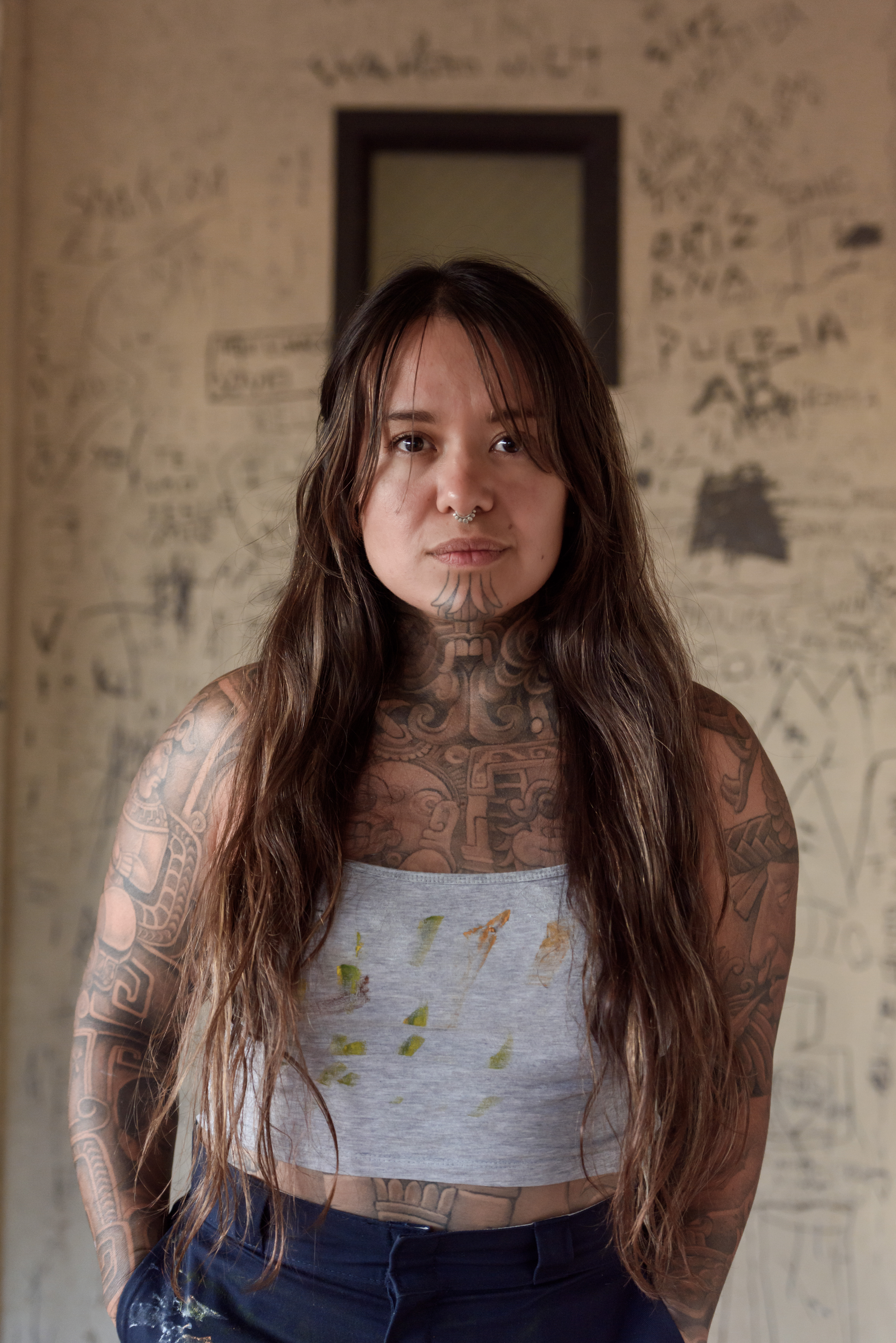
For the spring issue of the IDA Journal, Art as Collective, Song spoke with artist Arleene Correa Valencia about migration, family, memory, and the role art can play as a social record. Across her work, Correa Valencia returns to the idea of home not only as a place, but as a feeling built through safety, love, family, and community. In this conversation, she reflects on growing up in Napa after migrating from Michoacan, collaborating with her family in the studio, and making work that documents histories too often left out of official archives.
Can you introduce yourself and describe your artistic journey? What places do you bring with you in your art?
I was born in Michoacan and left when I was three years old. That was not a choice my parents made lightly. It was something done out of necessity. I think now more than ever we are being asked to think about why and how migration happens, and to move beyond the idea that migration is simply about wanting to travel. There is a difference between travel and escape, and that difference is important to my work, to conversations around migration, and to the way we understand our neighbors.
My family migrated to the United States in 1997, when I was three. We ended up in Napa because of the labor industry around agriculture and winemaking. Like many migrant families, you go where there is work, and where labor is accessible for people who do not speak English. I feel lucky that we landed here. I am also really interested in migration patterns and the ways people build communities wherever they end up. A lot of people from Puebla, for example, end up in New York, and people call it Puebla York. These communities become places that resemble an idea of home.
When you ask what parts of myself I bring to the work, I bring the part of myself that is Mexican, that is Mexican-born, and that is also detached from that home because I was taken away from it as a way of survival. I rebuilt home and identity in the United States, in this community in Napa. I feel both detached from and connected to Napa. I am not in the winemaking industry, I do not work in food, so there is a disconnection. At the same time, this place gave my family an opportunity. It gave me a home when I did not have one.
I also bring the idea that home exists in the heart and in family. For me, home is not necessarily a place. Home is a feeling. Trying to define where we are from can feel like such a colonial idea, this need to tie ourselves to land. Maybe because I was raised undocumented, I understand home as safety and unconditional love rather than a fixed place. There is no single safe place for people like myself, which is devastating to think about.
Especially in violent times, when someone’s life or an entire people’s lives can be threatened, we have to recognize that home is not only a location. Home is the people who surround us. It is the love that surrounds us.
I read that your father wanted to be a painter. Did that shape your decision to become an artist?
I grew up in Napa, and for a long time I did not know what my career options were. My mom was a house cleaner, a landscaper, and she worked at and managed a KFC in town. I saw my parents juggle all these different jobs, anything they could get their hands on and do. My mom, even now, will say, “I can be your mechanic, clean your house, and cook the food.” She does everything.
As a child, you go to school and say, “I am going to be an astronaut,” or “I am going to be a surgeon,” or “I am going to be a doctor.” Then reality sets in. You realize you cannot get a driver’s license, you cannot go to college in the same way, and you do not have a Social Security number. The options felt extremely limited.
I have not shared this often, but I started cleaning with my mom when I was ten. I helped clean houses and a dentist’s office at night, after school, and on weekends because my mom needed help and we had to make ends meet. I became a nanny when I was fourteen. From a young age, I understood my existence through service, through catering to someone else. It was about how my body could be used and extracted from, rather than how I could be creative or feed something that was for myself.
The only thing I knew how to do outside of providing labor was make art with my dad. Making art with him at the dining room table replicated that feeling of safety at home. There was this unconditional understanding that we could throw colors on a canvas and allow ourselves to be who we wanted to be. We looked at history, at the past, at our ancestors and what they left behind. We looked at a lot of Mexica and Aztec imagery. That surrounded our household growing up. Through my father’s perspective and through art, I developed a deep understanding of who I was.
I was stubborn. I was still nannying full time when I was in high school and community college in Napa, and I started to think that maybe I could build a career in the arts. At that time, I was fully undocumented. I did not have DACA. I did not have anything. But I knew I could not limit myself to being part of this labor industry. I did not want to be a house cleaner or run a restaurant. At the same time, I understood that the possibilities of coming out of my status were almost nonexistent.
When DACA came, it gave me some sort of status, and it felt like a miracle. Suddenly I could look at myself and ask: now that I have this tiny opportunity, do I really go after my dad’s dream of being a painter? Do we sacrifice it all?
My parents made so many sacrifices to come to this country. Here I was with a small opening, and instead of becoming a doctor or lawyer or something that might fulfill society’s expectations, I thought, maybe I can go into the arts. I wanted to chase that dream not only to fulfill my own desire for creativity, but also to think about the generational aspect of dreams, the dreams that are not necessarily ours but that we inherit.
I really believe in that. I believe my dad, as a young person, was interested in the arts and did not have the opportunity to let that creativity flourish. He came to this country, brought his kids here, and maybe dreamed that one of us would be interested in it. In my heart, I see it like a seed that was planted generations ago. It had very little water and light for years and years. Then I received this sliver of sunshine, this drop of water, and I thought: all right, let’s go.
It was a tough decision. The safe thing would have been to go to school for a secure job. Instead, I looked at my dad and thought, we are going to try to make it. I remember the day so clearly. He said, “Arleene, becoming an artist is like trying to swim upstream. The strength of the water, the rocks, all these things are going to come at you and try to take you down. Mija, it is going to be really hard.”
And I thought, okay. Let’s go.
When you are undocumented or living in limbo, you can feel like you have nothing to lose. I did not have money. I do not come from wealth. I am not going to inherit anything from my parents. So why not try to win the lottery in this career? If it did not work, I had the work ethic. I could go back to school. I could nanny. There are so many labor-intensive jobs that pay well. I really had nothing to lose, and I was honoring my father and our family history. It felt like an easy choice, while also being one of the hardest things I have ever done.
Were your parents supportive of that decision?
They were. My dad was supportive, but he also wanted to shield me from pain and suffering. I think he believed I could physically do the work. The limitation was not physical. What scared him was the emotional side, the criticism, the loneliness.
I think he knew he had already put me in a situation where I was not at an advantage. It was like running a race where I had already been placed behind others. Now I would be running next to people with wealth, connections, family names, parents who went to college, and people who already had access to collections and institutions. We know how the art world functions. Nepotism is real. Wealth matters. Your last name matters.
My dad was looking at it from the perspective of: we are nobody, we have nothing, and you are going to be surrounded by people who do not look like you, do not speak like you, and may not recognize your culture or the way we move. They may not understand what you are doing. That is going to be tough.
He was right. Some days it is so lonely. Some days it feels like I am yelling into a void. But it is worth it.
You have collaborated with your parents on your work. What does it mean for you and your family to work together in a fine arts setting?
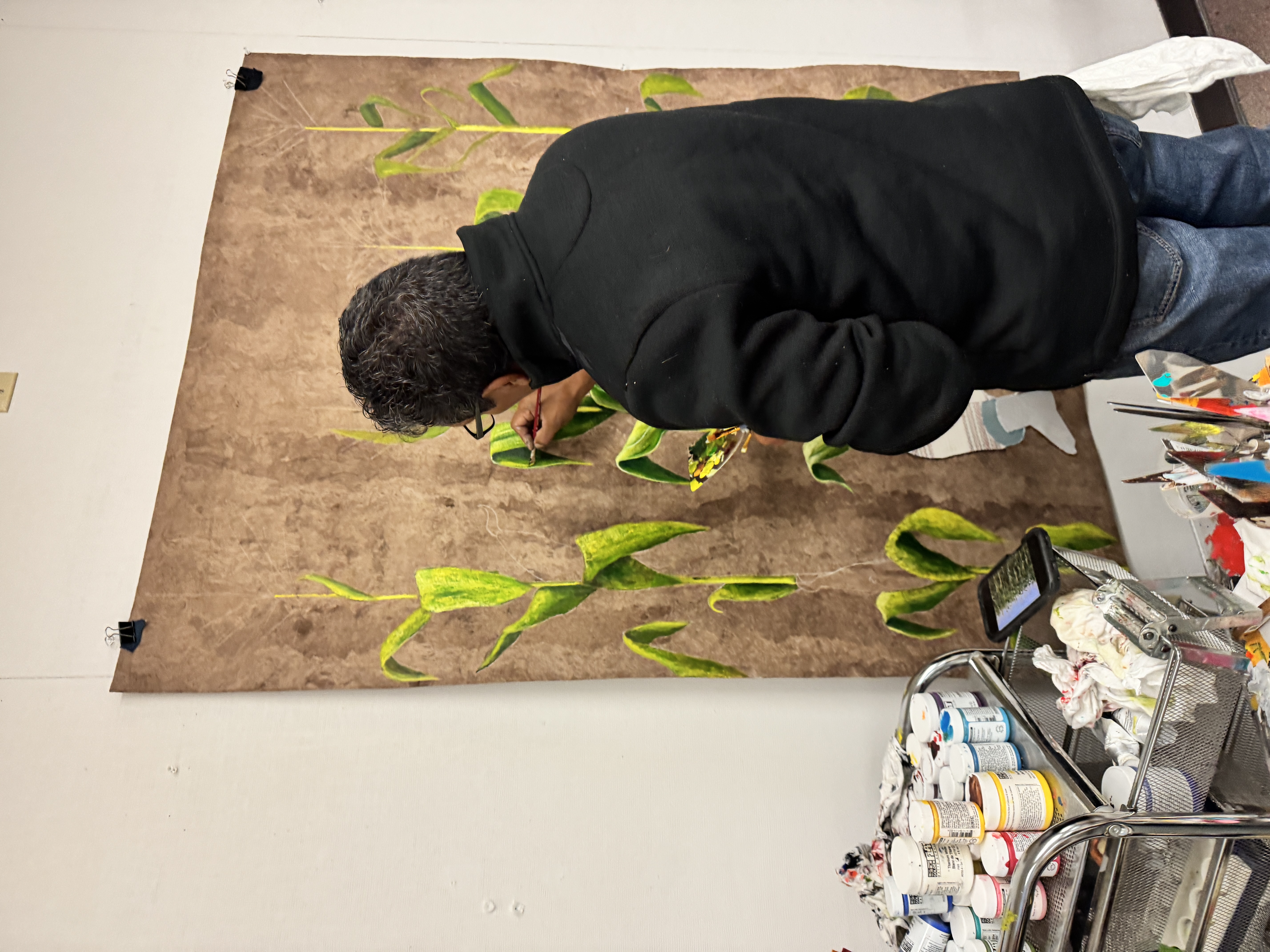
My dad is my full-time painter. He makes the physical acrylic paintings in the work, and I am really proud of that. I love painting, and there is no reason I could not make the paintings myself, except that I want him to be involved. Having our name on the wall represents more than just me. It represents the sacrifices of our communities, the history of our people, this migration, and our ancestors. It feels communal.
My dad paints most of the acrylic elements. He has this thing where he will not paint flowers, so if there are flowers in the paintings, those are mine. I paint the flowers. He is kind of a princess that way. But he is a great painter.
There is no hierarchy in the studio. He has ideas. He will say, “Arleene, I feel like painting a cactus,” and I will think about how a cactus fits into the exhibition, what it represents, and how it can help create the story we are trying to tell. Sometimes I will say, “Dad, I need you to paint another truck,” and he says, “Okay, let’s go.” It is collaborative in that way.
A lot of the time, I feel like his assistant. He will say, “Draw this out for me, put gesso on it, bring me all the colors,” and then he sits and paints. It does not feel like I am the artist telling him what to do while he cannot be creative or expressive. I know many artist studios have assistants, but my studio is not run that way. I allow people to bring ideas to me. I feel like a coordinator of ideas. I put things together so they make sense. I make the final call, but my dad will still come in and say, “I have to change that color. I hate it.” And I will say, all right, never mind that I just spent all this time doing it.
I love when that happens because it shows how assertive he is. It shows that he cares about the work. If he did not care, he would not be so passionate.
My mother-in-law handles a lot of the textile and embroidery work in the studio. She preps needles and brings so much knowledge. She is originally from El Salvador and survived the Civil War doing embroidery on napkins. She was in an all-girls church setting, and the guerrilleros would not touch those sacred places. The girls were safer there. They embroidered napkins, sold them in the market, and used that money to feed the girls. She quite literally survived because of textile art and practice.
Bringing that language into the work is important to me because it shows a historical use of art beyond making something to hang on a wall. It shows the strength and power of art in communities that need it, especially communities moving through distress.
I have been with my partner since we were fifteen, so my mother-in-law is very much my mom. She is as important to the practice as my dad, and she brings a special feeling into the work. It has also allowed her to recontextualize her relationship to craft and textiles. I think she had come to see embroidery as an old thing, something nobody cared about, and maybe even something traumatic. When she taught me, I was able to take it and make it into a language that showed her it was not only tied to trauma. It could become something beautiful.
So the studio feels like three hearts: my mother-in-law, my dad, and me.
We also collaborate with a fourth-generation papermaking family in Puebla, Mexico. They make our paper. We work on amate, a bark paper that has been made in Mexico since pre-contact times. The paper takes months and months to make, and they also work in a family studio. There are little boys and girls, a dad, a son, everyone working on this paper. It is their family’s language of survival. It is how they feed their family.
To have earth from our motherland as the canvas, and then to have my family tell our story on it, is the most beautiful process. It is about the past and the present. It is about archiving this history and what is happening to us.
“Work can be documentation. It can archive a story that history does not usually recognize.”
Your studio sounds deeply intergenerational. How do younger family members enter the work?
My nieces and nephews are my muses. All the children in the works are my nieces and nephews. They are involved too. I photograph them and then make paintings from those photographs. I have been doing this since the day they were born, so they are very well trained. They know that if I want a picture, they can ask for ice cream, a toy, or a little money. They know their worth.
It is really fun because it is all about family. I used to feel insecure that the world would not care about my family, or that my family was not special enough to become a work of art. But I also knew there was nothing I could talk about more honestly and openly than my family.
I believe we should be careful about making work that is not truly our story. There are many conversations around cultural appropriation and who gets to speak about oppression or migration. Sometimes we need to step back and recognize that not every voice needs to be the loudest voice. Maybe our opinion on a subject is not what the world needs to learn from.
But talking about being undocumented, my migration, and my family is my truth. That is something I know. Nobody can take that away from me. I can learn a lot about figurative painting or color theory, and sometimes I need to be quiet and listen. But this is the one thing I know to be true to me and my family.
While I felt insecure about it in the past, I now recognize that if I can be as honest as possible in the work, it allows people to see themselves in it. Their story can feel validated, seen, and recognized.
Your work involves so much physical detail, from paper to embroidery to painting, while also carrying emotionally difficult stories. How do you balance the physical labor with the emotional labor?
I do not know that I do balance it.
Making the work is hard. I recently opened a solo exhibition in New York, and it was the toughest show I have ever made. It was dedicated to my brother and my father. I cried every single day in the studio for months. I could not work on a piece without feeling like my world was falling apart.
At the same time, I was looking at the news every day and hearing the way our community was being talked about, targeted, and hunted down. I felt overwhelmed by the fact that I get to sit in a beautiful studio surrounded by vineyards, making work and being safe, while my community is suffering. There is so much guilt attached to that. There is so much loss.
The work is physically exhausting. I make large paintings, and I have to go under them and come back up, embroidering each stitch one by one. It also takes a toll on my mental health. I think about migration all day, every day. I read about it, study it, and talk about it. It is all-consuming.
I want to understand it so much. I want to advocate for our people. At the same time, I recognize that it can break me down physically and mentally. I have back issues. There is fear of deportation, fear of being targeted, fear that someone will want to hurt me because I speak about these issues. I worry about people finding out where I live. I worry about whether I will be allowed back into the country if I leave. There is so much fear.
But I am not leaving. I am not walking away. Maybe these are the rocks my dad was talking about. It has to be hard because I care about it so much.
On a practical level, I am in therapy, and that helps. My therapist will say, “If your artwork is making you cry, do not make artwork.” And I say, well, that is not what I am here for.
One thing I wish I had known earlier is that I do not have to have the answers while I am making the work. I do not have to have a resolution. The work can be documentation. It can document what is happening right now, how we are feeling together as a family and as a community.
Does a painting provide answers to immigration, border security, or border politics? No, maybe it will not. But it can archive a story that history does not usually recognize. That frees me from the responsibility of feeling like I have to provide an answer.
Maybe the painting will not resolve anything. But it can still matter. Guernica documents a moment in time and gives us insight into how people felt. If we put too much pressure on what the work has to do, we can lose sight of what it is already doing.
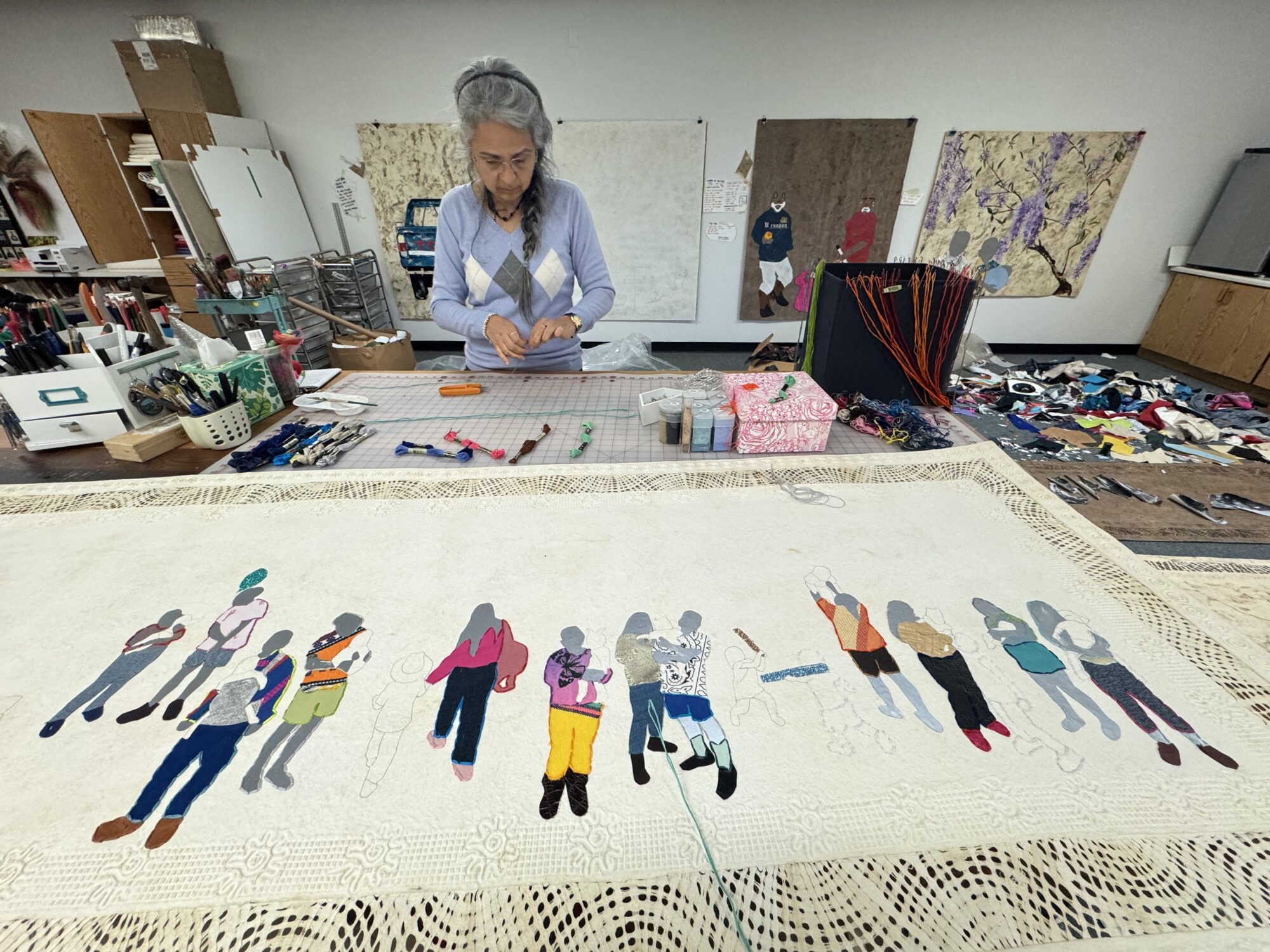
What does it mean to be an artist in Napa Valley, a place often associated with wealth, wine, and tourism, while your work focuses on the people who tend that land?
I feel both connected to and disconnected from Napa. This is my home. I have lived here since I was three. I understand the valley like the back of my hand. I appreciate wine, and I think winemaking is an incredible craft. I love that my community has such a huge contribution to such a beautiful and successful industry. That is something to be proud of.
When it comes to my work, though, I feel connected to the land, but I do not always feel connected to Napa as an art context. I am part of Napa, but my work does not always feel like it belongs to Napa. We do not really have the kind of arts community I find elsewhere. There is a lot of craft culture, Sunday painters, vineyard paintings, bottles of wine, things like that.
Sometimes when people at the gym see me in painted clothes and ask what I do, I say, “I am a painter.” They ask if I paint dog portraits. I say, “No,” but the conversation shows the gap in understanding. In New York, if you say you are an artist, people understand that it carries weight, that it is a career and a contribution to society. In Napa, it is often taken differently.
I am also heavily tattooed, so people make assumptions about me. But in a way, I do not mind the lack of understanding because it lets me live a private life. Nobody really knows what I do. Nobody fully understands it, and that is okay. I can drop off the kids at school, and if my niece tells her art teacher that her aunt is an artist, I am sure the teacher thinks, “Sure, everyone’s an artist.” I kind of like that.
Maybe I need that disconnect. The work is political and heavy, so the privacy is good for me.
With the Bay Area more broadly, I feel a stronger sense of community. San Francisco is close, but it feels like a different world. People understand and value the arts there in a different way. San Francisco is not tied to only one industry. It is multicultural, full of murals, color, and life. In the Bay Area, I feel connected and supported by organizations like Headlands, Root Division, my gallery, and local arts centers. We are small but mighty.
I love California. I joke about moving back to New York because I want to live there so badly, but then it gets cold and I remember that I am a California girl. I need the sun.
The idea of home and identity is always fluctuating. It is always changing. Being an artist here can be confusing, but it works most days. When it does not, I leave for New York, Los Angeles, or somewhere else, and I get the fix I need to feel more like myself.
Does making the work in Napa also create a kind of freedom?
Yes. It brings education to people, especially to children. I like working with the local Boys and Girls Club and with local schools. I like showing kids that you can be an artist, that it is a real job, and that you can make a decent living. In a larger city, there are so many artists around that it may feel more normal. Here, it carries a lot of weight.
I am also inspired by Napa because my family is here. I watch the children grow up in the same place I grew up. I see them go to the park where I went as a kid, and I watch their interactions with the world that shaped me. That inspires how I make the work.
I have not painted grapes, but wine language is sometimes embedded in the work. It is inevitable.
I also feel safe making work here because this is home. I can make the work I want to make without judgment. Nobody is walking through my studio door asking what I am doing or what I am making. There is no sign. There is nothing. It is just me making paintings.
That allows me to be as expressive as I want to be without the pressures of the art world saying, “That is not good enough,” or “Change this,” or “Look at what someone else is doing.” Here, the language of the work can remain authentic to myself, my family, and our culture.
You have worked on murals and community projects with young people and elders. How does engaging with the public shape your personal art practice? What role do artists have in a community and in a larger collective?
For me, community practice and social practice were never optional. When I think about making art, I think about it as communal. That is true physically, because my family is involved in the studio, but it is also true because my communities have shaped my understanding of art and my visual language.
Everything I know about art was first taught to me by my father. I was trained in art school, and I have learned deeply from my tattoo community. I feel grateful for all of that knowledge. Sharing it, especially with young kids, is a way to make sure it lives on. It is a way to foster an environment where the arts are seen as equally important as any other career.
I love having exhibitions in museums and galleries, but I love nothing more than showing a child that there is a way to be creative, to make a living, and to do something positive for your community. You do not have to be greedy or selfish. You can have a good life doing something generous and creative. That is cool.
Working with children and elders is probably one of the most stressful parts of my job, but it is also the most rewarding. People come to the table with very different understandings of art. Some say, “I cannot make art. I am not an artist. I do not know how to draw.” You have to break that down. Sometimes you have to remove the idea of Art with a capital A and say, “Okay, how about you just show up and write your name?” Sometimes people do not know how to write, so you say, “Okay, let’s make a line. Let’s learn how to use a pencil.”
At that point, we are not naming things as painting, embroidery, or drawing. We are making human connections with materials. We strip away everything until we get to the simple act of making a mark, something that represents your hand and your heart.
Once people get past those layers, they start to enjoy it. A student might make a little embroidered line and say, “That was fun. What if I go left? What if I go right?” Older students might say they cannot draw, and then we spend thirty minutes drawing an animal that looks like a strange donkey and laughing together. That joy is the art. The art is not only the final object. It is the moment of freedom, safety, and presence. It is the feeling of being home and knowing someone can speak to you in your language.
I feel responsible for that work because I did not have it outside of my dad teaching me at home. I grew up extremely low income. There were no painting classes, art courses, weekend museum trips, or steady access to paint and drawing materials. So I feel that, if nothing else, I can show up for kids like me, kids whose parents are working multiple jobs and may not have the time or resources to give them that kind of access.
I can be one conversation where they discover something new. I think that is life changing. I think that can change the world.
⫘⫘⫘⫘⫘⫘⫘⫘⫘⫘⫘⫘⫘⫘⫘⫘⫘⫘⫘⫘⫘⫘⫘⫘⫘⫘⫘⫘⫘⫘⫘⫘⫘⫘⫘⫘⫘⫘⫘⫘
If you want to submit to the the IDA quarterly journal, we have an open call each quarter. Please subscribe to our mailing list by emailing lsongwu@stanford.edu to be notified or follow our Instagram for more updates.